



Template or generator: what each one leaves to you
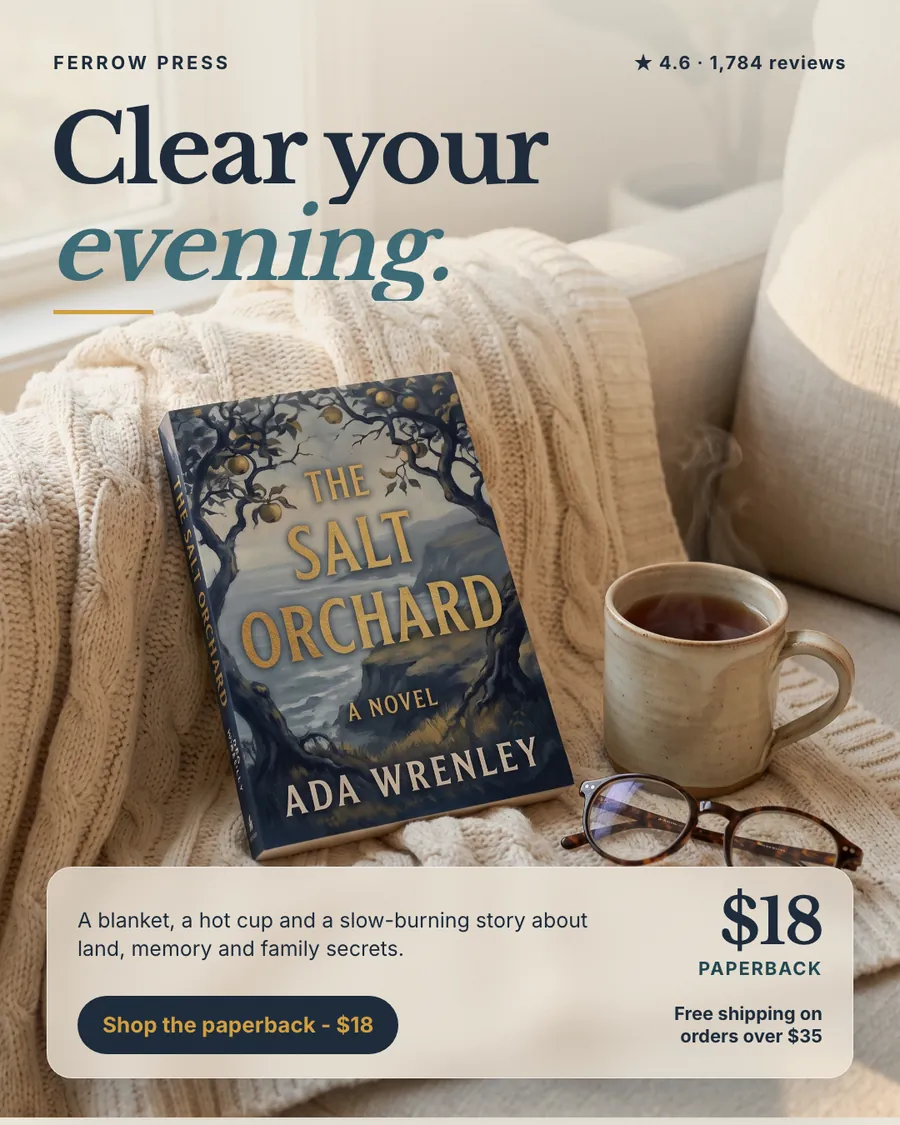
A template is a layout with empty boxes. You still cut out the cover, write every line, check every number and resize the result for each placement. That works for one launch graphic. It gets slow when you want several ads that each give a stranger a different reason to start reading.
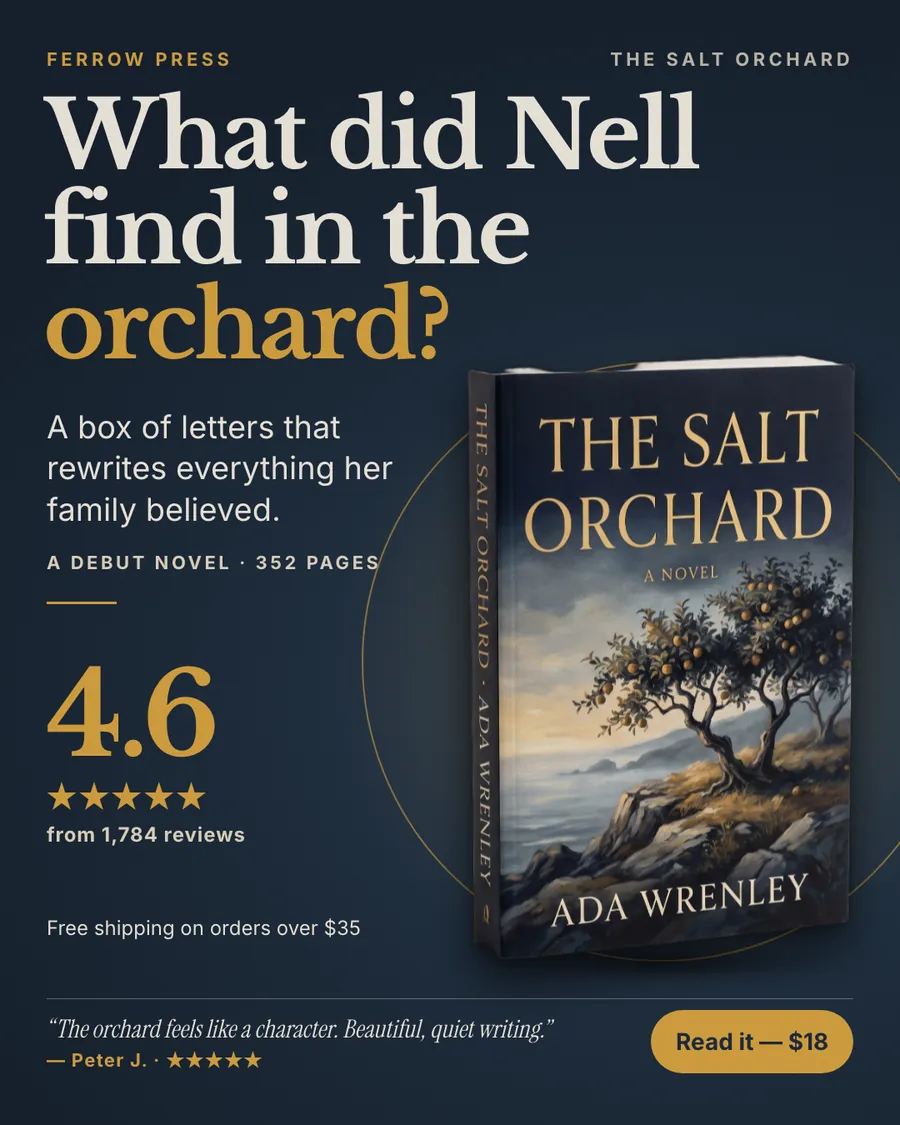
- The cover stays your file. It is placed on the ad, never redrawn, so the title and the author's name read exactly as printed. Covers are mostly lettering, which is what image models most often get wrong (see our prompt tests).
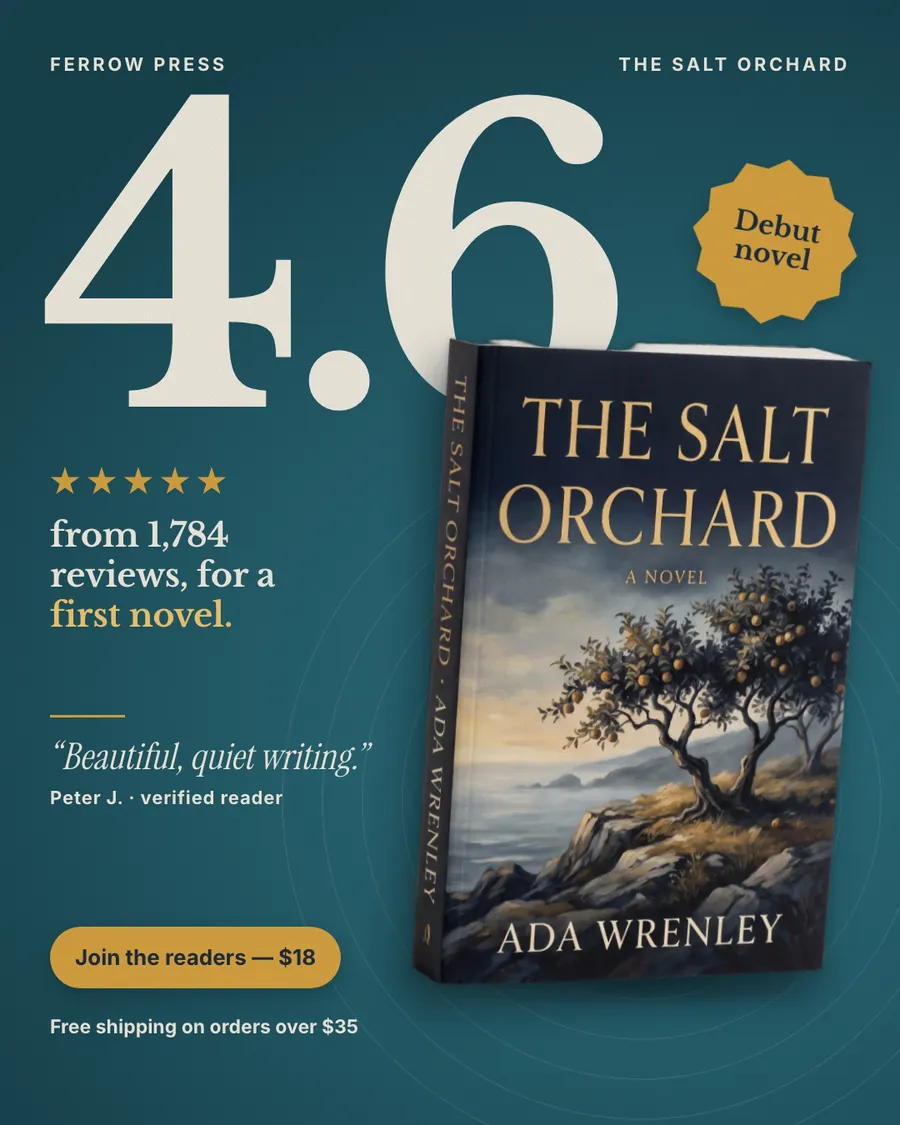
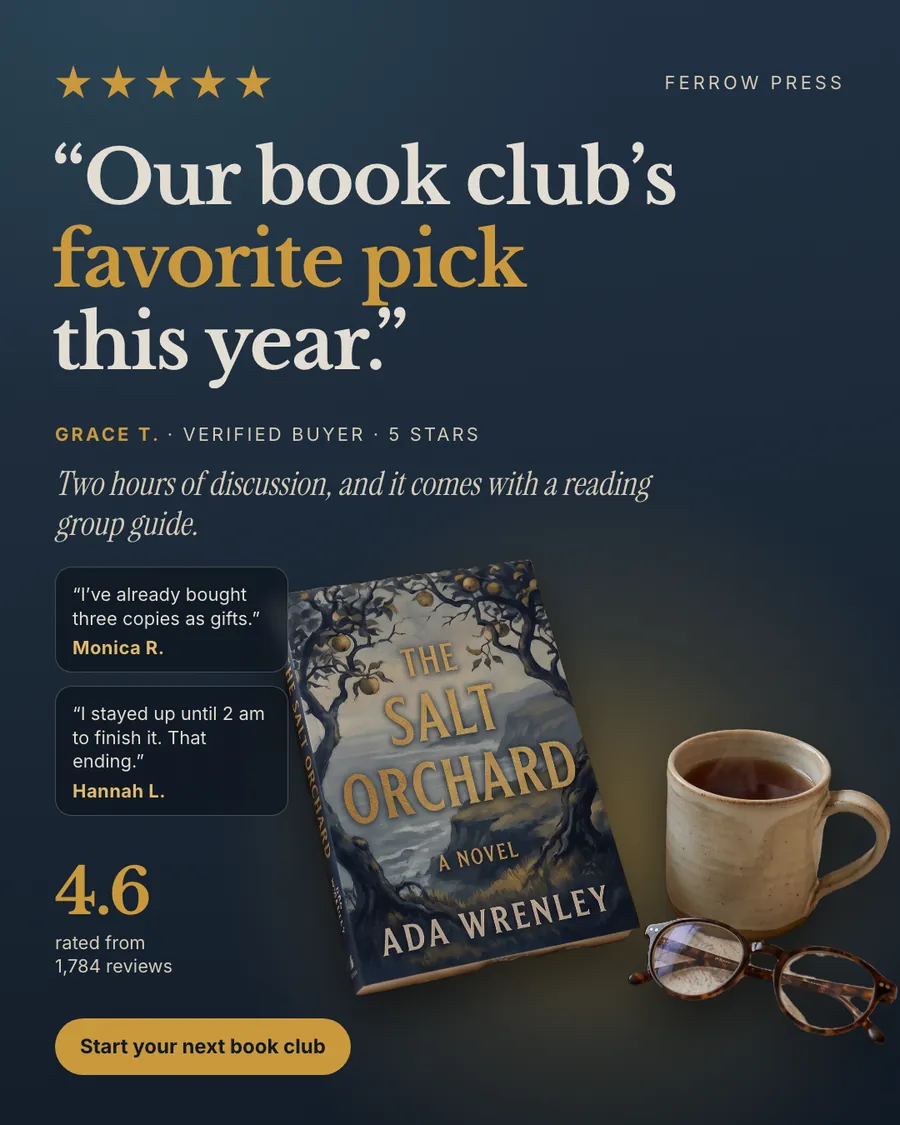
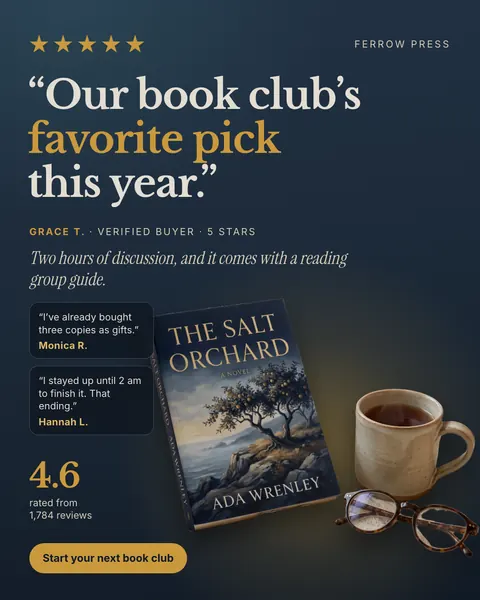
- Each ad leads with something different: a question from the story, a reader's reaction, the rating of a debut, the book club angle.
- The words come from your page. If your jacket copy never mentions a twist, no ad promises one.
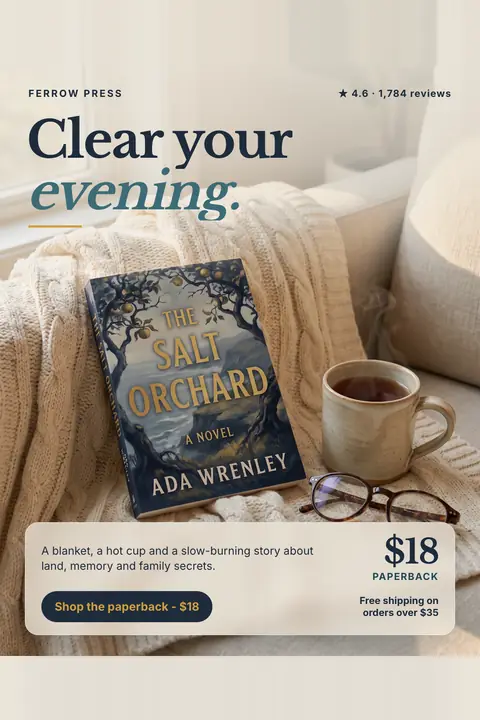
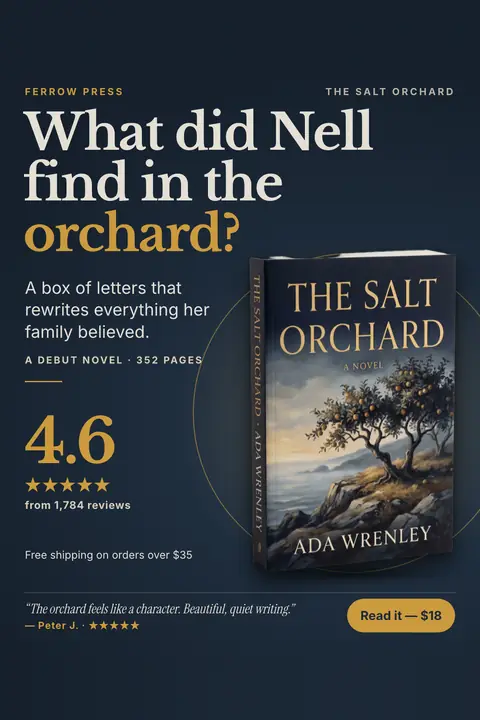
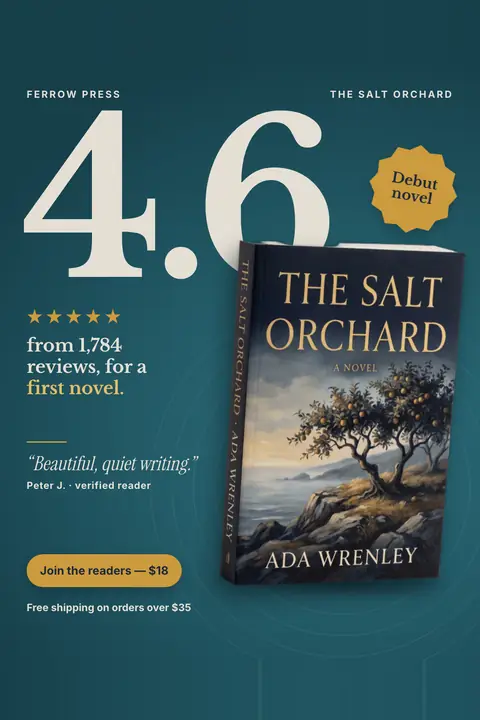
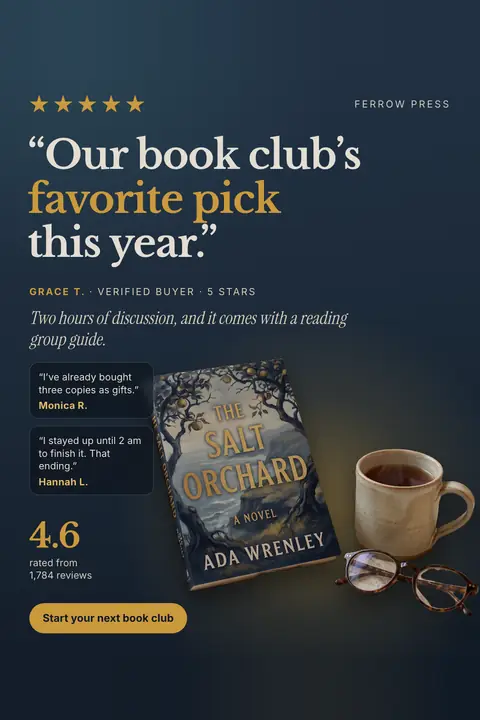
- Five sizes come with each paid design: 4:5 for feeds, 1:1, 9:16 for Stories and Reels, 2:3 for Pinterest (close to a book's own shape) and 1.91:1 for Google Display.
Where your book is sold changes what we can read
Your own store gives the engine the most: every format and its price, the description, the reviews your review app shows and any shipping offer. Shopify, WooCommerce, Wix, Squarespace and most other store builders work.
A single amazon.com product page, the link with /dp/ in it, can be read too: title, price, photos, rating and review count. Author pages, search results and other Amazon countries can't, so for those, upload the cover and type the details in. The ads then use what you typed and nothing else.