What makes a skincare ad work
Three reasons to buy carry most skincare ads: the active (15% vitamin C, 2% salicylic acid), the concern it helps with (dark spots, dryness, breakouts) and proof (a star rating, a review count, a customer's words). Lead with one per ad. An ad that tries all three at once reads like the back of the box.
- Name the ingredient and the percentage when your page states it. "Niacinamide 10%" stops a scroll that "advanced formula" never will.
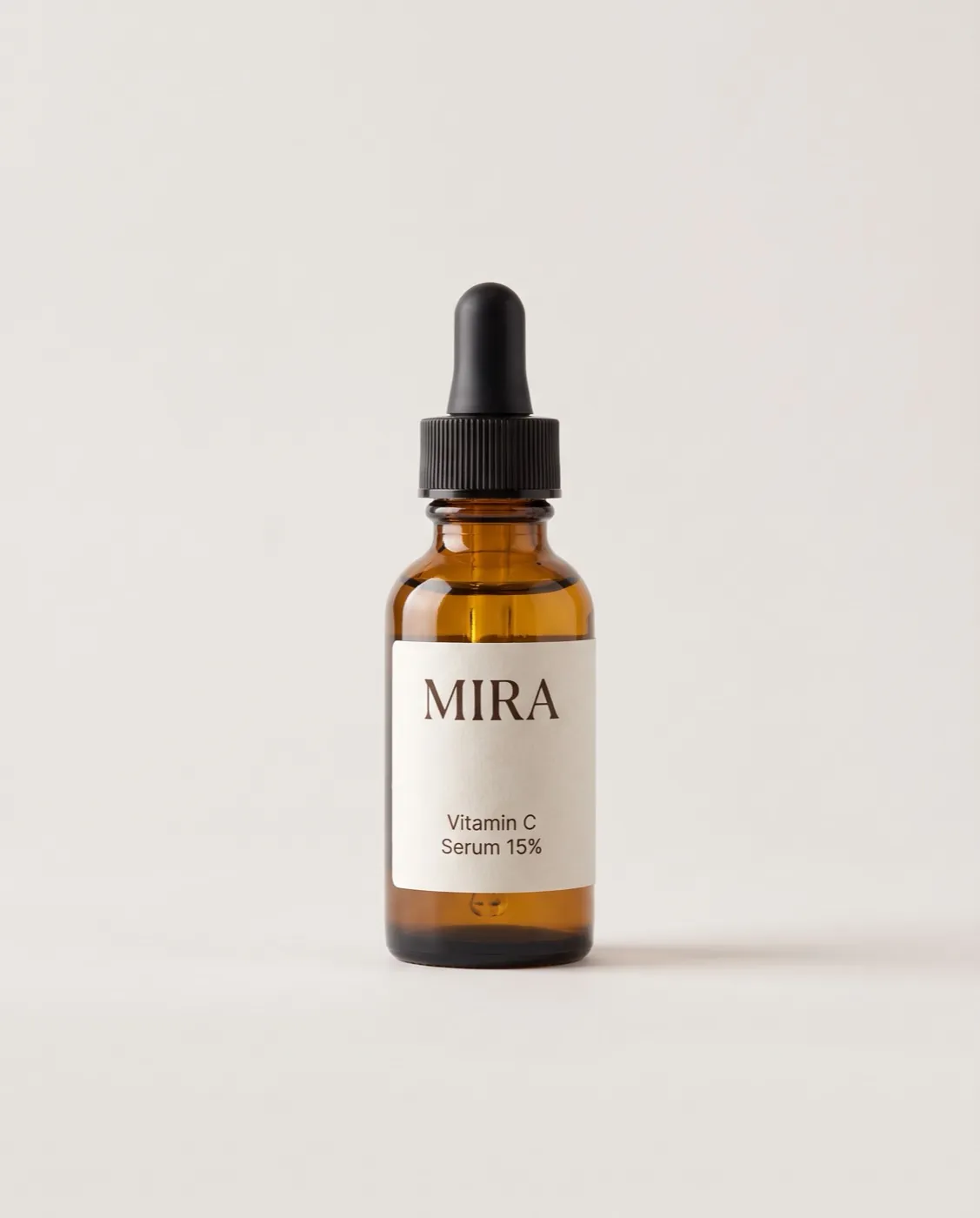
- Keep the bottle big and the label sharp. The packaging is what shoppers look for when they land on your store.
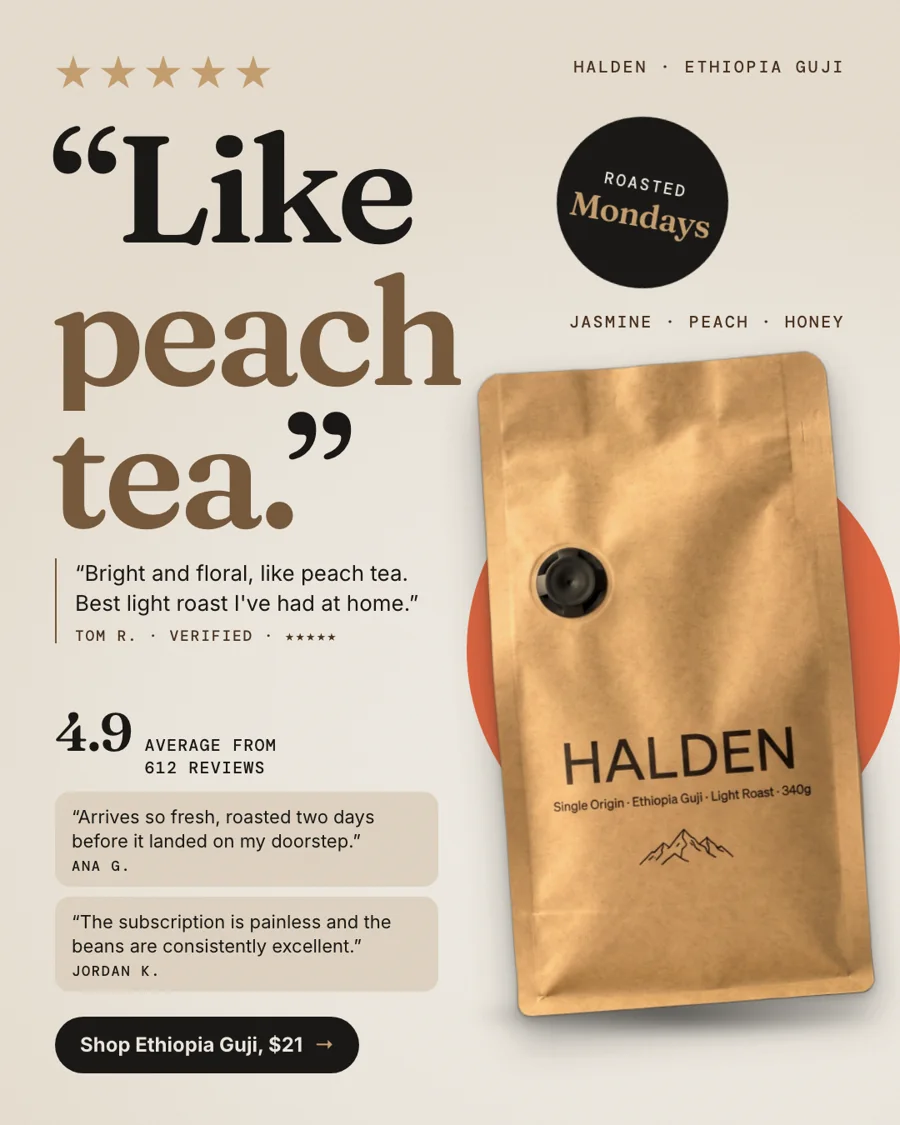
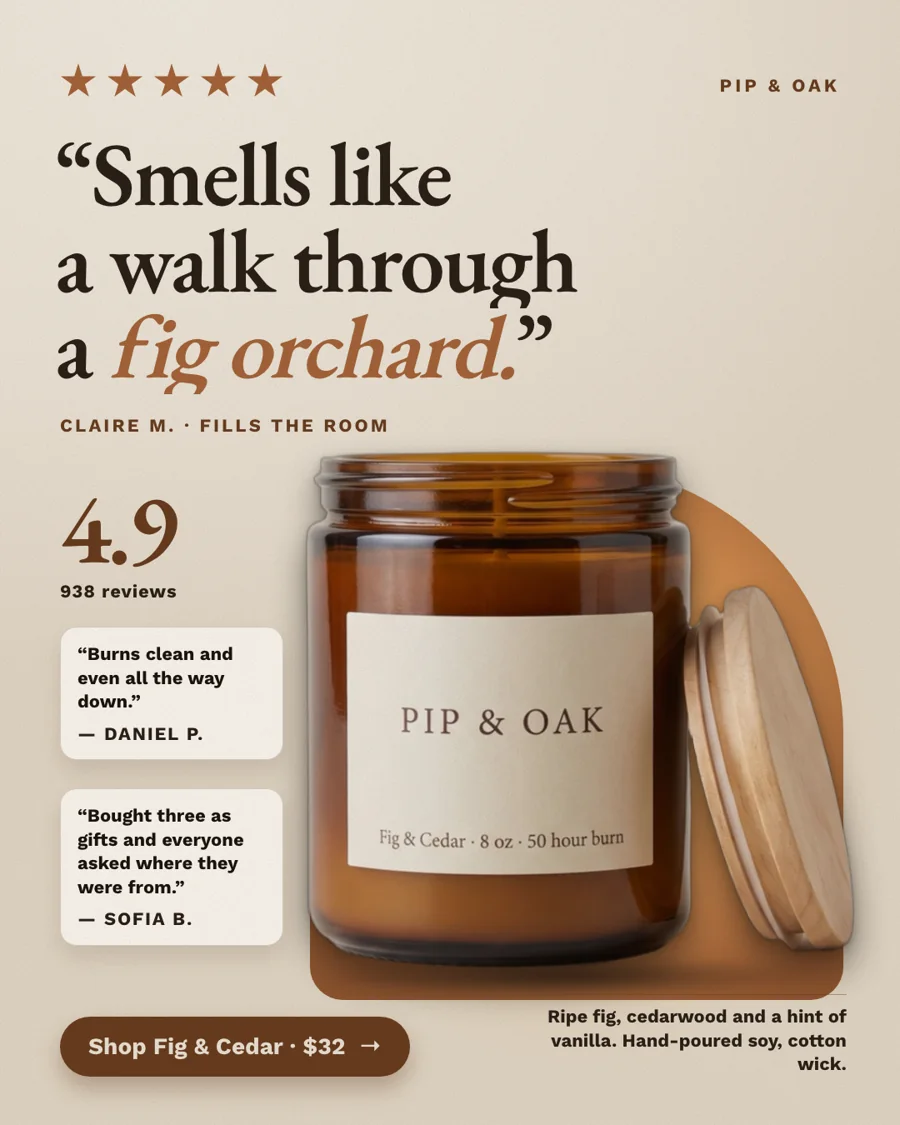
- Quote reviews word for word. A real line like "absorbs fast and doesn't sting" beats a polished claim, and it is the only kind of quote we use.
- Pair a calm, editorial version with a bolder offer version. Skincare buyers split between trust and price, and you want to know which yours are.
Claims, Meta review and before-and-after
Meta restricts ads that imply something about the viewer's body or health, and literal before-and-after images are a common reason skincare ads get rejected. Safer framing describes the product and lets customers describe the result in their own words ("my dark spots are noticeably lighter after a month") instead of telling the viewer what is wrong with their skin.
Honest note: we never create or edit an "after" photo. If a percentage, a dermatologist claim or "clinically proven" is not on your product page, it does not go in the ad.
An example: Mira Vitamin C Serum
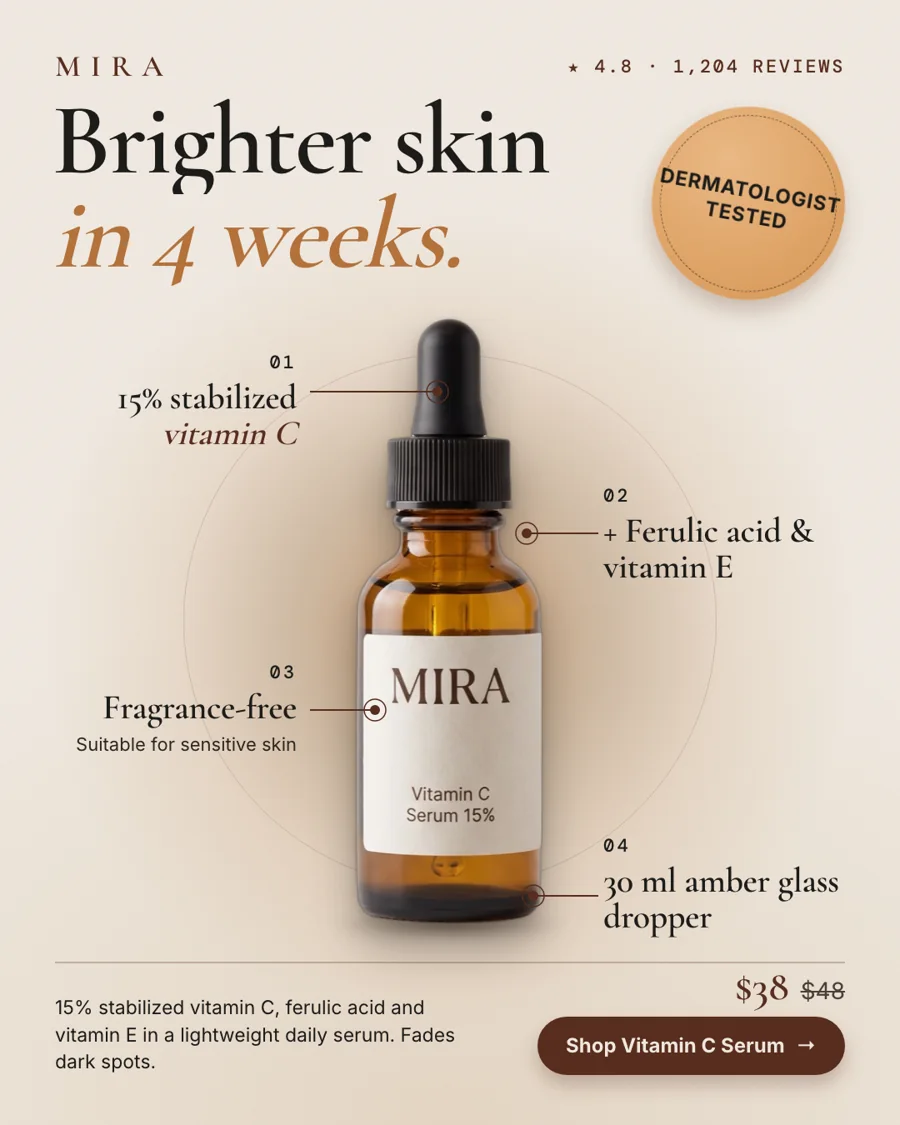
Mira is one of our fictional sample brands. From its product page our engine took the price ($38, down from $48), the rating (4.8 from 1,204 reviews) and the actives, then built an annotated ad that points at each one on the real bottle.
The same serum also became a quote wall of three verbatim reviews and a Notes-app "morning routine" ad. Same bottle, three different reasons to buy.