pet product ads
Pet product ads that win over the dog and the owner (with Facebook ad examples)
A pet product has two customers. The animal decides whether it works; the person decides whether to buy. Good pet ads prove both: the dog's attention in the photo, and the first ingredient, calories and size the owner looks up. Below are seven ads our engine made for Scout & Bramble, a fictional dog treat brand, and the label rules that also apply to what your ads say.
Updated · The sample ads are for a fictional brand, made by our engine.
In short
What makes a good pet product ad?
A good pet product ad shows the animal's real interest and gives the owner the facts they check: the first ingredient, what's left out, calories per treat or serving, size and price. It uses owners' own stories, keeps health and medical claims out unless the product is approved for them, and shows the product exactly as it arrives.
Real sample ads
Seven pet product ads for Scout & Bramble
Scout & Bramble is a fictional brand. Its product page: Salmon & Sweet Potato Training Bites, soft and pea-sized, wild-caught Alaskan salmon as the first ingredient plus sweet potato and pumpkin, 3 calories per bite, about 300 bites in a resealable 8 oz pouch, no corn, wheat, soy or artificial preservatives, baked in small batches in Oregon, $16, 4.8 from 3,207 reviews. The ads talk to the owner; the dog just has to look interested.
Scout & Bramble · Salmon & Sweet Potato Training Bites, 8 oz · $16 · 4.8 from 3,207 reviews · fictional
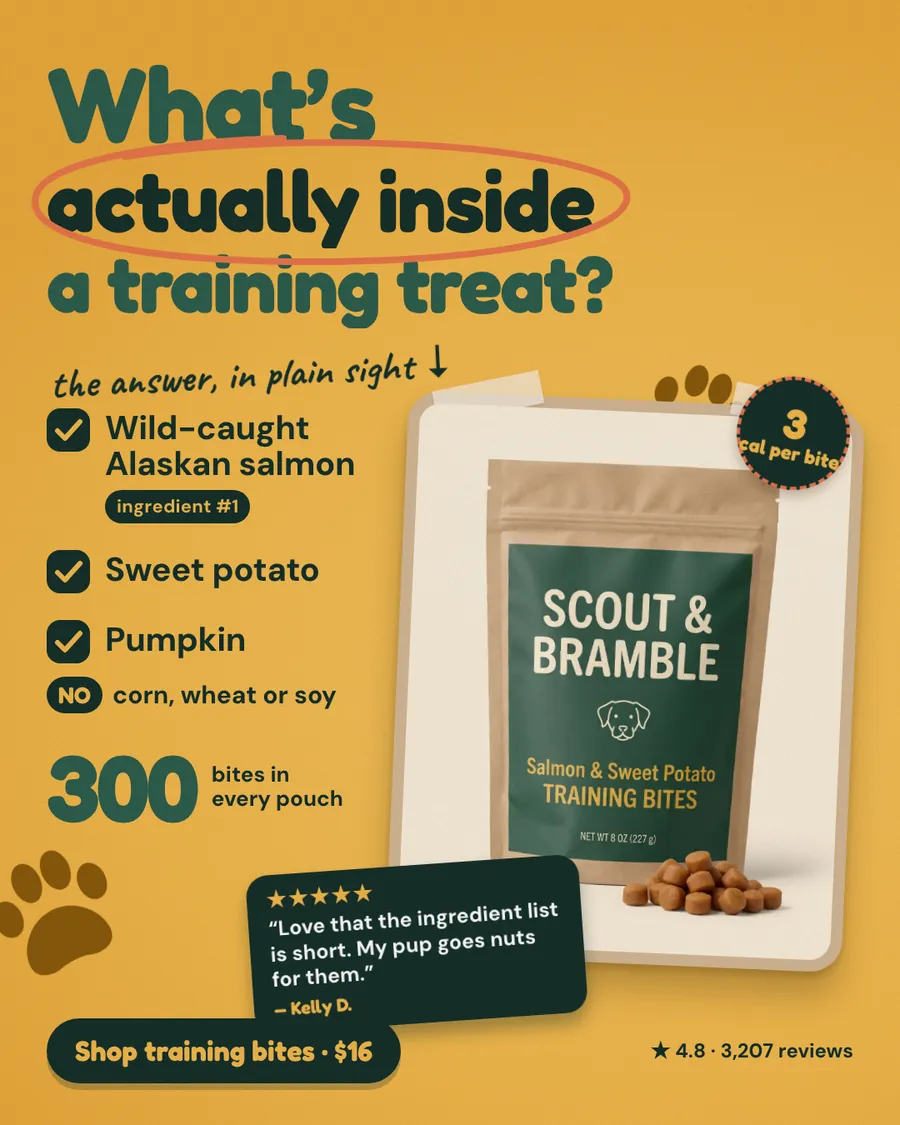
Question hookIngredients
Scout & Bramble: What's actually inside a training treat?
Owners flip the pouch to read the ingredients, so this ad does the flipping for them. Ingredients are listed by weight, which is why "salmon is ingredient #1" is a real claim and not decoration.
Store facts used: Salmon as ingredient #1, sweet potato, pumpkin, no corn, wheat or soy, 3 cal per bite, 300 bites, $16, 4.8 from 3,207 reviews, Kelly D. quote
Matched by the fact check: $16 · 4.8 rating · 3,207 reviews · 3 cal · #1 · 1 review quote, word for word
The 2:3 Pinterest version
Fictional sample brand · made by our engine
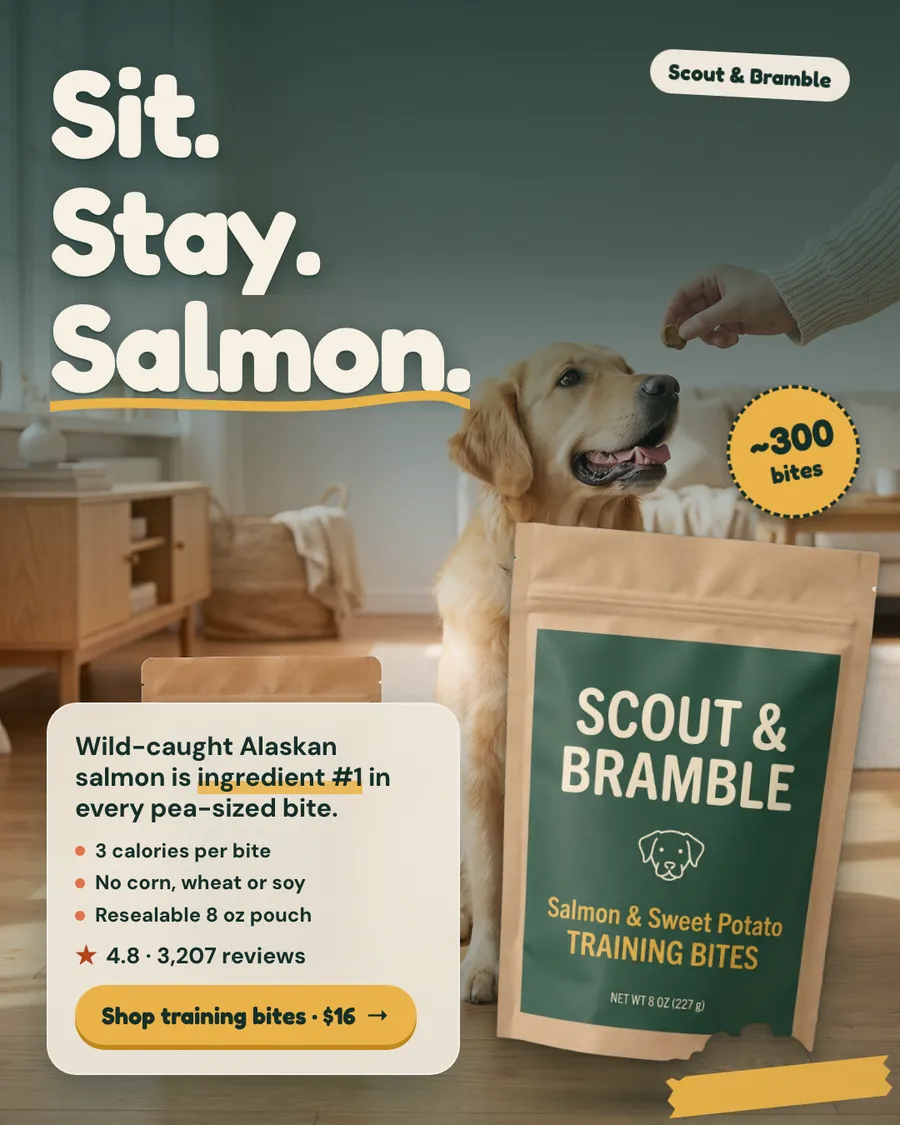
Lifestyle typeIngredients
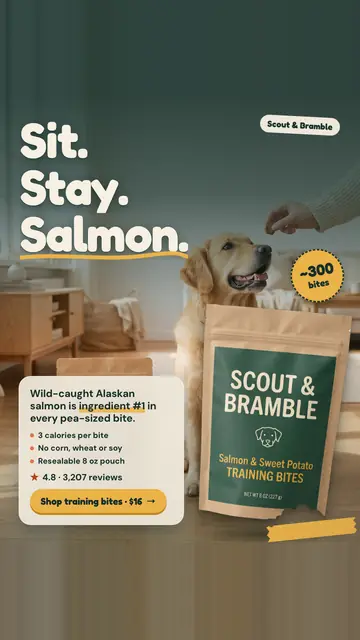
Scout & Bramble: Sit. Stay. Salmon.
The headline is a training cue, so the product's job is clear before anyone reads further. The dog is watching the hand, not eating, which keeps the scene believable and makes the treat the point.
Store facts used: Wild-caught Alaskan salmon as ingredient #1, 3 calories per bite, no corn, wheat or soy, 8 oz resealable pouch, ~300 bites, 4.8 from 3,207 reviews, $16
Matched by the fact check: $16 · 4.8 rating · 3,207 reviews · 3 calories · 8 oz · #1
The 2:3 Pinterest version
Fictional sample brand · made by our engine
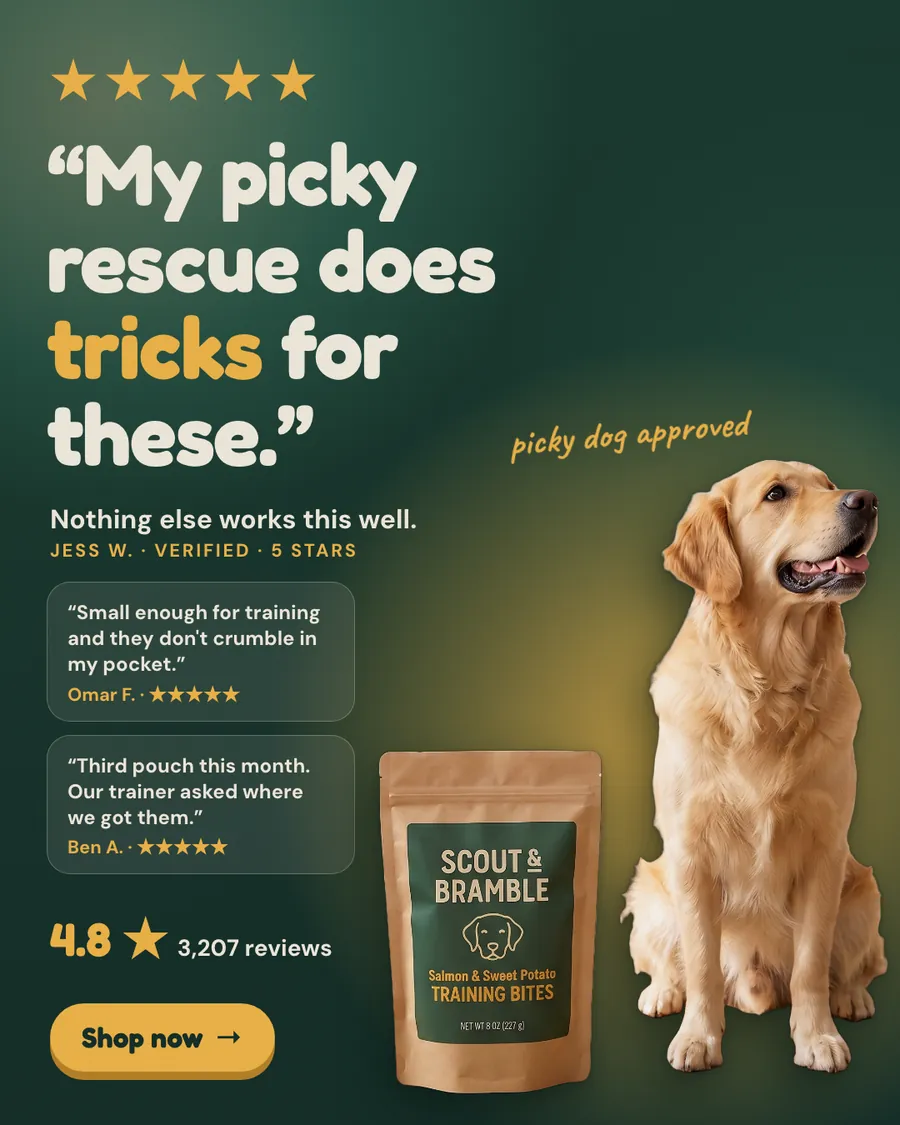
Review cardSocial proof
Scout & Bramble: “My picky rescue does tricks for these.”
A real-sounding reviewer quote is the headline, with 'tricks' picked out in gold. Two short reviews and the 4.8 rating sit below it, and the dog photo backs up the claim at a glance.
Store facts used: Reviewer quotes (Jess W., Omar F., Ben A.), 4.8 rating, 3,207 reviews, Salmon & Sweet Potato Training Bites, 8 oz pouch
Matched by the fact check: 4.8 rating · 3,207 reviews · 3 review quotes, word for word
The 2:3 Pinterest version
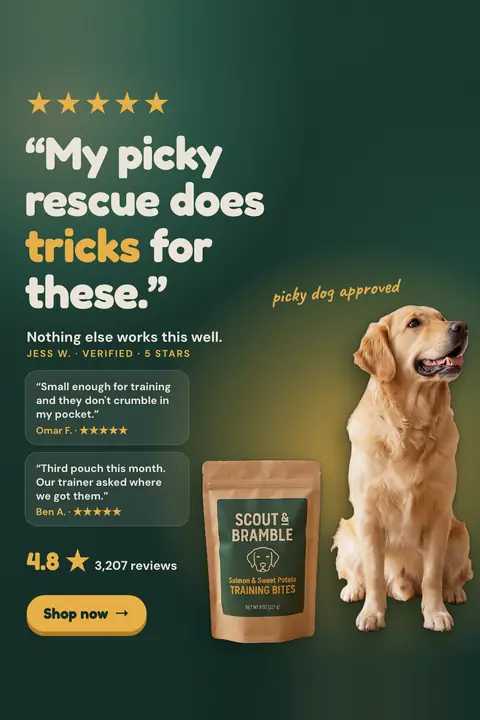
Fictional sample brand · made by our engine
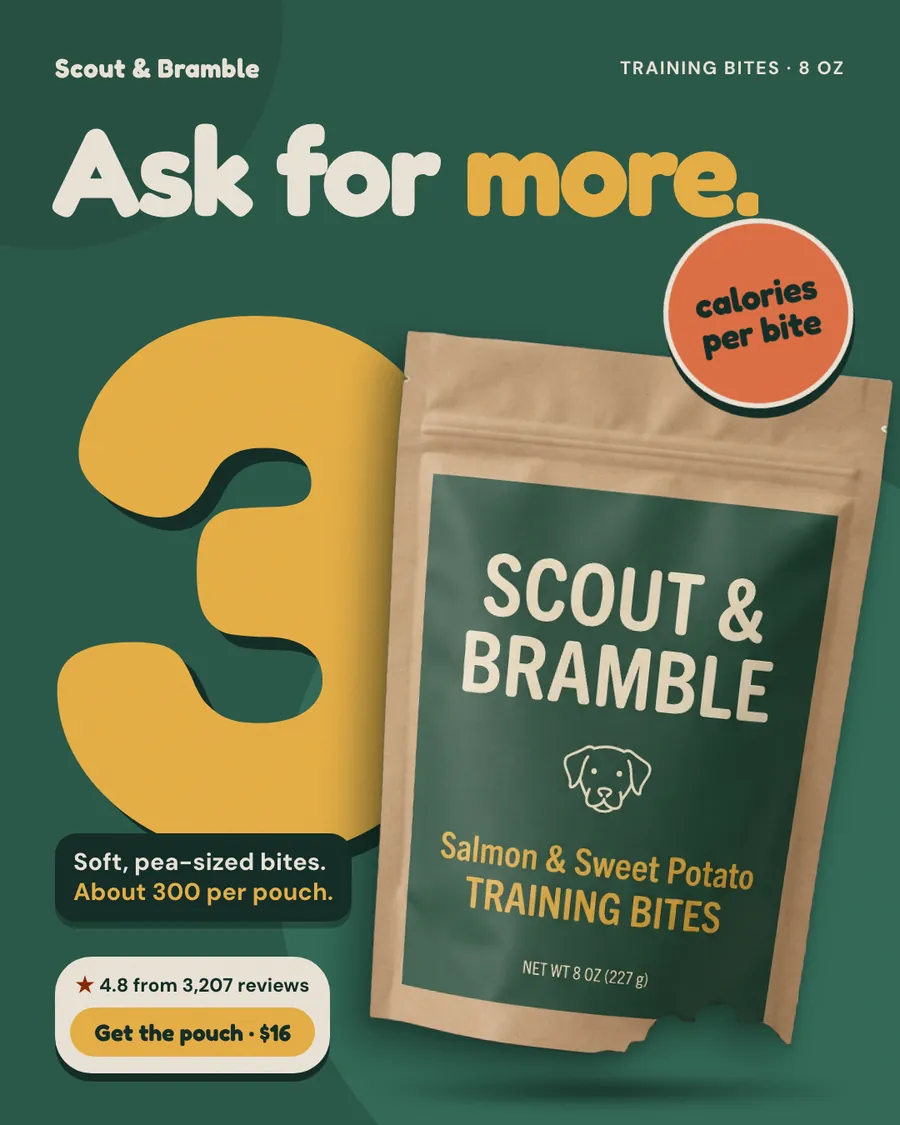
Big numberBenefit
Scout & Bramble: Ask for more.
For training treats, calories per piece is the number owners worry about, because they hand out dozens in a session. A giant 3 answers it at a glance.
Store facts used: 3 calories per bite, soft pea-sized bites, about 300 per pouch, 8 oz, 4.8 from 3,207 reviews, $16
Matched by the fact check: $16 · 4.8 rating · 3,207 reviews · 8 oz
The 2:3 Pinterest version
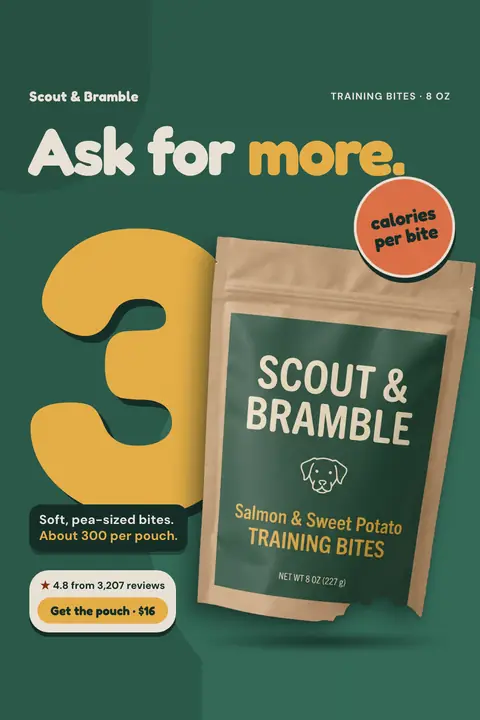
Fictional sample brand · made by our engine
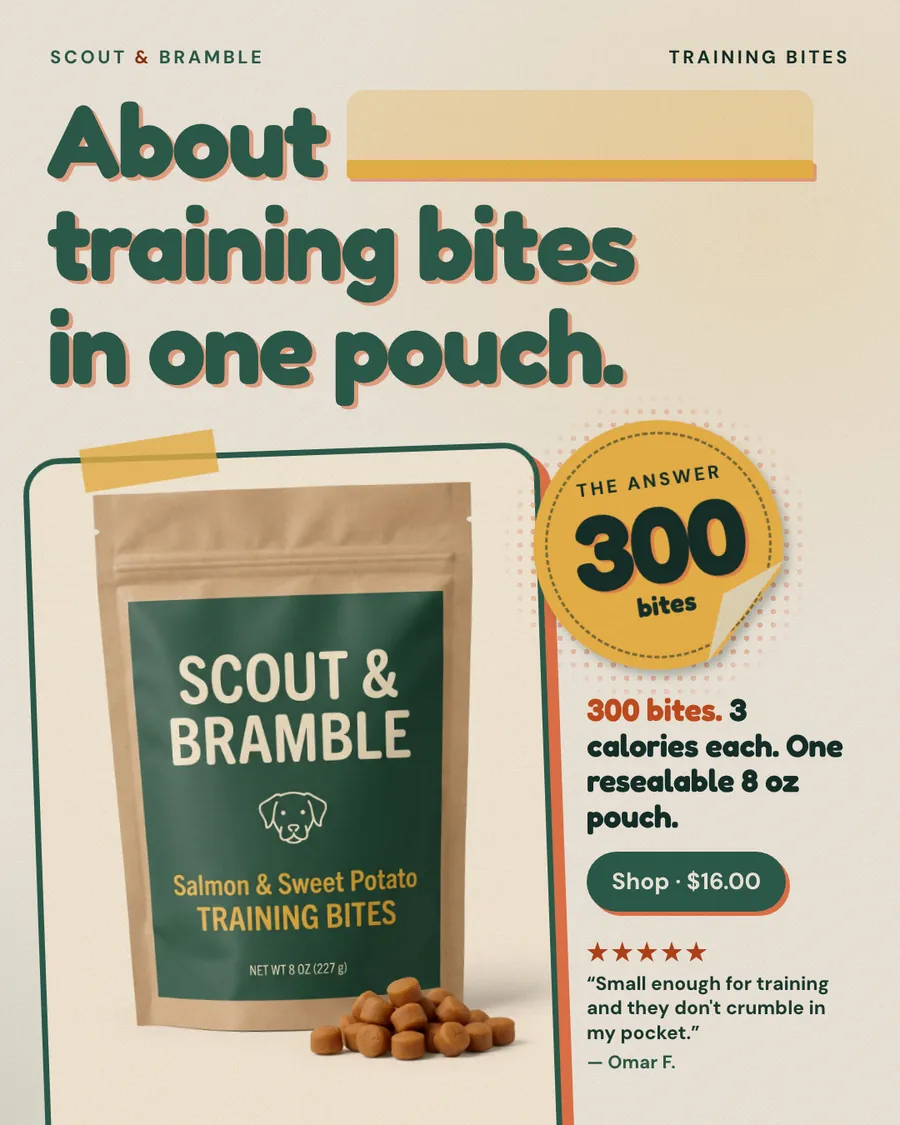
Fill in the blankValue
Scout & Bramble: About ______ training bites in one pouch.
The blank makes you read the line to fill it in, and the sticker answers it with a big 300. The 3 calories each and $16.00 price sit right below, so the value is clear without a click.
Store facts used: 300 bites, 3 calories each, resealable 8 oz pouch, $16.00, quoted reviewer Omar F.
Matched by the fact check: $16.00 · 3 calories · 8 oz · 1 review quote, word for word
The 2:3 Pinterest version
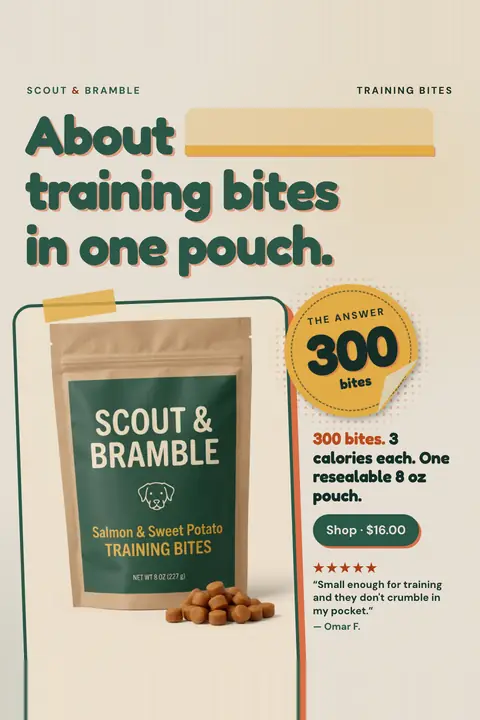
Fictional sample brand · made by our engine
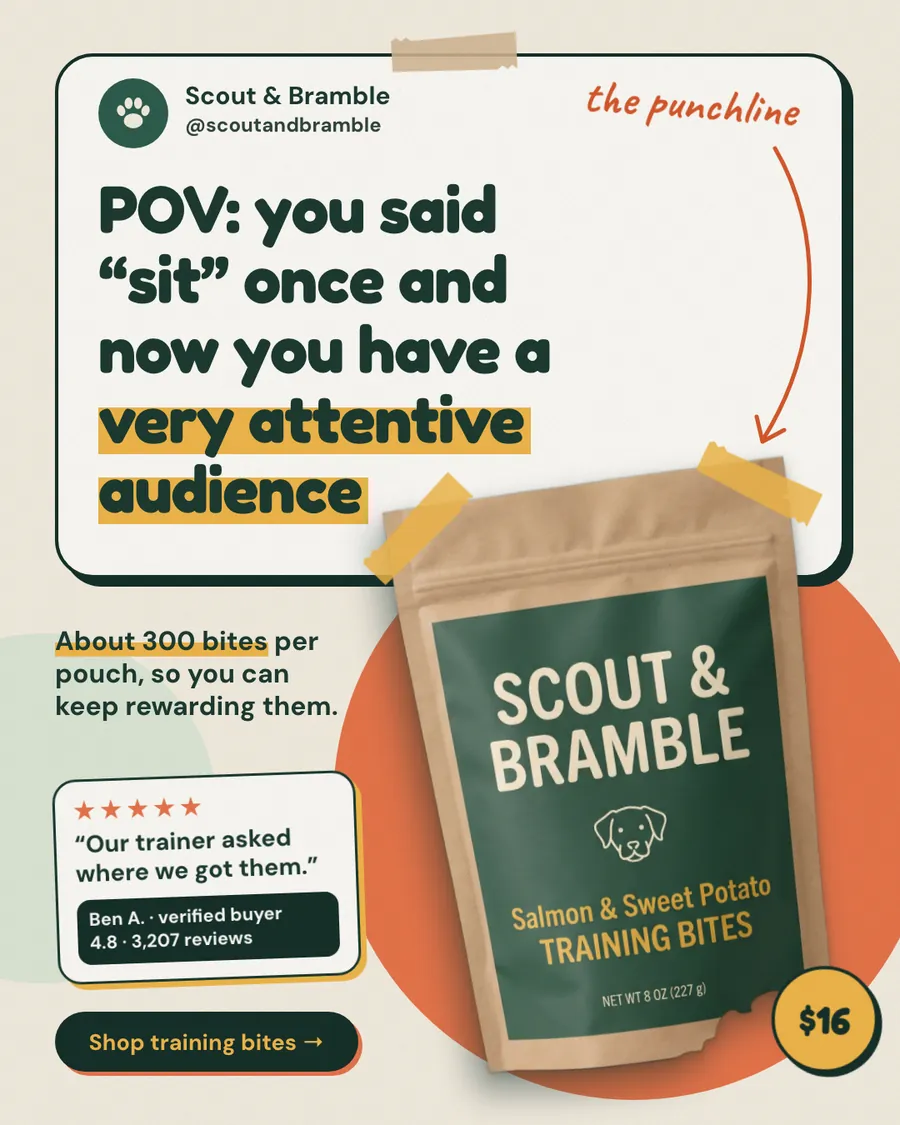
POV memePersonality
Scout & Bramble: POV: you said “sit” once and now you have a very attentive audience
The meme headline sets up a familiar dog moment, and a hand-drawn arrow labeled 'the punchline' points straight at the pouch. The product becomes the joke, and the 300-bites line gives the practical reason.
Store facts used: $16, 8 oz pouch, about 300 bites per pouch, 4.8 from 3,207 reviews, Ben A. quote: Our trainer asked where we got them.
Matched by the fact check: $16 · 4.8 rating · 3,207 reviews · 1 review quote, word for word
The 2:3 Pinterest version
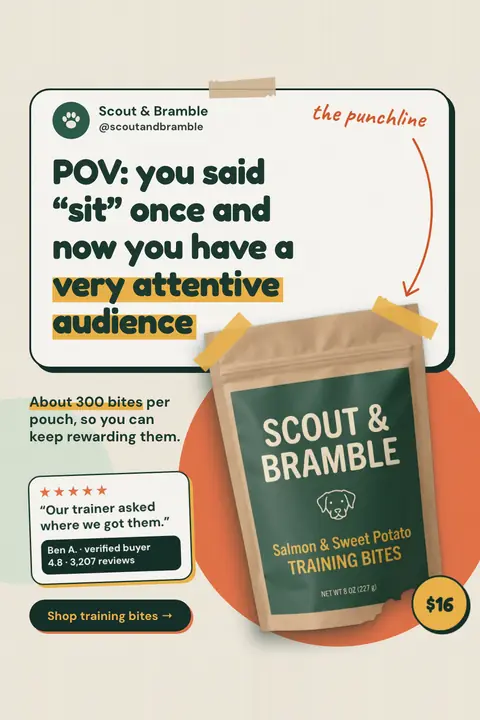
Fictional sample brand · made by our engine
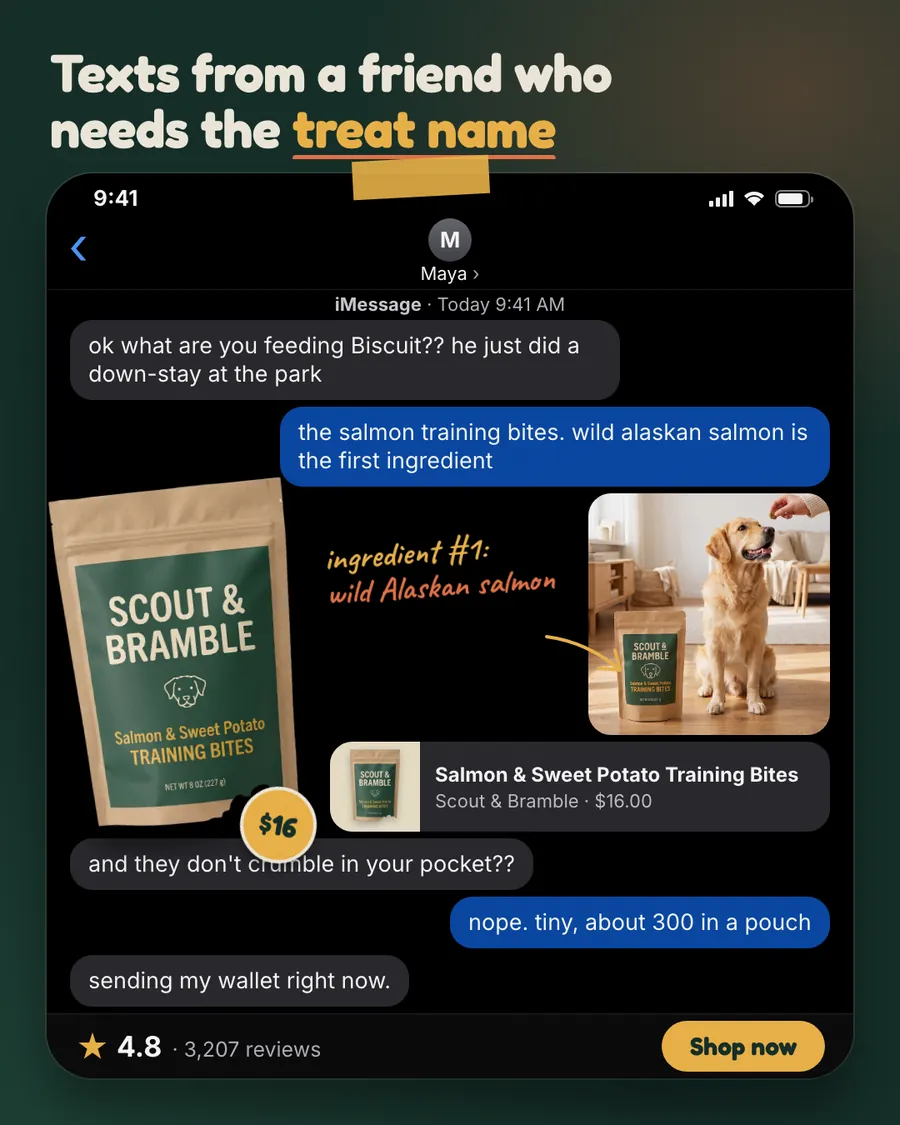
Text threadWord of mouth
Scout & Bramble: Texts from a friend who needs the treat name
It looks like a real text thread, so the recommendation feels like it came from a friend. The pouch, the wild Alaskan salmon note and the $16 price appear right inside the chat, so the answer comes with the question.
Store facts used: Salmon & Sweet Potato Training Bites, $16.00, wild Alaskan salmon first ingredient, about 300 per pouch, 4.8 from 3,207 reviews
Matched by the fact check: $16.00 · $16 · 4.8 rating · 3,207 reviews · #1
The 2:3 Pinterest version
Fictional sample brand · made by our engine
The same ad in all five sizes
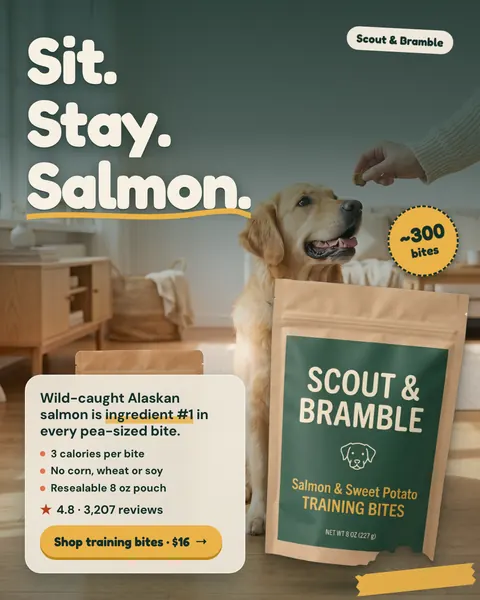
4:5 · Facebook and Instagram feeds
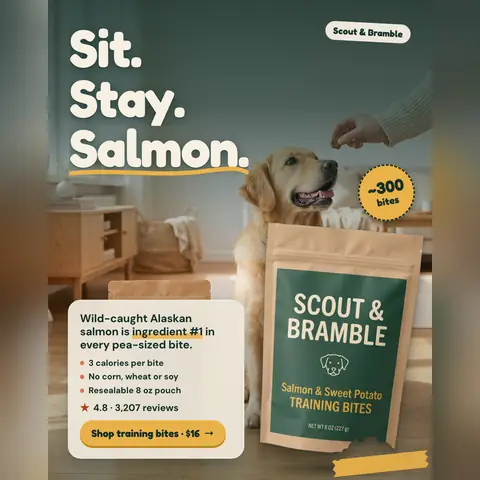
1:1 · Square placements
9:16 · Stories, Reels, TikTok
2:3 · Pinterest
1.91:1 · Google Display
What makes a pet product ad work: four reasons owners buy
Owners buy for their animal, so their questions are about what goes into it and whether it'll be used. Each reason below has a fact from the pouch that proves it.
- 01
What's in it, first
Ingredient lists are the first thing careful owners read, and a short one is a reason to buy on its own.
See it in the ad "What's actually inside a training treat?"Proof the ad needs
The first ingredient named exactly as on the label (wild-caught Alaskan salmon), the short list, and what's left out (no corn, wheat or soy).
- 02
Small enough to train with
Training means many treats a day, so owners count calories per piece and want something they can break or hand out fast.
See it in the ad "Ask for more."Proof the ad needs
Calories per treat as the label states them (3 per bite), the size (pea-sized) and the count (about 300 per pouch).
- 03
The dog actually wants it
A treat the dog ignores is wasted money, and picky eaters are a common worry in reviews.
See it in the ad "“My picky rescue does tricks for these.”"Proof the ad needs
Owners' own words about their dogs ("My picky rescue does tricks for these") with first names, the rating and the count, and a photo of a dog paying attention.
- 04
Value per treat
Training treats get used up fast, so owners judge them per piece.
See it in the ad "About ______ training bites in one pouch."Proof the ad needs
Price divided by count, from your own page: $16 for about 300 bites is about 5 cents a bite.
Photo checklist for pet product ads
A real animal and a readable package carry most pet ads. Plan the animal shots in short sessions; the package shots can be done any time.
The animal paying attention. Ears up, eyes on the treat or toy. It proves interest better than an animal mid-bite, and it's easier to get on camera.
The treat in a hand, for scale. "Pea-sized" means more next to fingers. Training-treat buyers want to see how small it really is.
The pouch front, name readable. Owners will look for it in the store and in their order confirmation. Kraft pouches photograph well in daylight.
The back panel: ingredients and calories. The proof behind every ingredient and calorie line. Shoot it flat for look-closer and checklist ads.
A treat pocket or training pouch. Matches the use: one reviewer says the bites don't crumble in a pocket, which only a pocket shot can show.
Real homes, real dogs. A couch, a hallway, a park. A studio dog on white looks like stock; a scruffy rescue on a rug looks like a customer's dog.
Pet-safe props only. Keep chocolate, grapes and onions out of the scene. Owners know they're harmful to dogs and will notice.
Pet product ad copy lines you can adapt
Talk to the person, enjoy the dog. Dog-person humor works; baby talk tends not to. Every number below comes from Scout & Bramble's pouch, so use yours.
Sit. Stay. Salmon.
A training cue as a headline.
3 calories a bite. About 300 bites a pouch.
From the calorie statement and the count.
Wild-caught Alaskan salmon, first ingredient.
Only if it's first on the list.
No corn, wheat or soy.
"My picky rescue does tricks for these."
An owner's words, with her first name.
About 5 cents a bite.
Price divided by count.
Baked in small batches in Oregon.
Where and how it's made, as your page states it.
POV: you said "sit" once and now you have a very attentive audience.
Humor about the dog, never about the owner.
Lines to leave out of pet product ads
| Avoid | Why | Say instead |
|---|---|---|
| "Eases sore joints" or "stops itchy skin" | AAFCO lists claiming or implying that a product treats a disease, without an approved drug in it, as a way to misbrand pet food. A treat isn't medicine. | "Salmon is ingredient #1." |
| "Complete and balanced" on a treat | It's a defined nutritional adequacy claim that needs the AAFCO statement behind it; treats labeled as a snack or treat don't have to meet it, and usually don't. | "A training treat. 3 calories a bite." |
| "Made with human-grade salmon" | AAFCO's standard accepts "human grade ingredients" only if the whole product meets the human grade pet food requirements. | "Wild-caught Alaskan salmon." |
| "Proven to calm anxious dogs" | AAFCO's model rules prohibit "proven" without scientific or empirical evidence, and calming anxiety is a health claim. | "Soft, pea-sized bites for training." |
| "Vet approved" | An expert endorsement needs real veterinarians who actually evaluated and recommend the product (FTC Endorsement Guides). | "Our trainer asked where we got them." (an owner's words) |
Pet food naming rules that also apply to your ads
Most US states adopt AAFCO's model pet food rules, and AAFCO counts brochures, store displays and websites as labeling, not just the bag. So the product name in your ad follows the same rules as the pouch. The names below are AAFCO's own examples.
| AAFCO rule | Name like | What it requires |
|---|---|---|
| 95% rule | "Beef Dog Food", "Chicken and Rice Cat Food" | The named ingredients are at least 95% of the product by weight, not counting added water (70% counting it). |
| 25% rule | "Chicken Dinner", "Beef Entrée", "Lamb and Rice Platter" | With a word like dinner, entrée or platter, the named ingredients are at least 25% without water (10% with it). |
| "With" rule | "Dog Food With Chicken" | At least 3% of each ingredient named after "with". |
| Flavor rule | "Chicken-flavored dog food" | A listed ingredient provides the flavor, and "flavored" is printed as large as the flavor name. |
Two more label rules matter for treat ads. Treats don't need a nutritional adequacy statement if "snack" or "treat" is on the front of the package. And the calorie statement is given per kilogram and per familiar unit, like per treat, which is exactly the number a training-treat ad wants.
What a pet treat ad can claim
Pet food is overseen by the FDA and by the states, and the AAFCO model rules most states use apply to promotional material as well as packaging. A few of them catch ad copy directly.
- No disease claims. Claiming or implying that a product treats a disease, when it doesn't contain an approved drug for it, misbrands the food.
- "Proven" needs proof. The word is prohibited without scientific or empirical evidence.
- Comparisons expire. A claim like "tastes better than brand X" must be substantiated and is limited to one year before it has to be removed or proven again.
- "New" has a shelf life. A new or improved designation is limited to six months of production.
- Pictures count. Graphics on the label must not misrepresent the product, which is a good rule for ads too: the treat in the photo should be the treat in the pouch.
Meta's own pet rule is about animals, not products. Its Advertising Standards don't allow ads that promote peer-to-peer sales of live animals, while legitimate businesses, shelters and rehoming services may advertise animals. Treats, toys and supplies are ordinary products.
The pet product calendar, autumn 2026 to summer 2027
Pet products follow the owner's year: holidays, new dogs, training seasons and the weather for walks.
| When | Moment | What to run |
|---|---|---|
| Now to Oct 31, 2026 | Pumpkin season and Halloween | If pumpkin is in the recipe, autumn ads can say so; keep Halloween props dog-safe. |
| Nov 27 to 30, 2026 | Black Friday to Cyber Monday | Variety packs and subscribe-and-save; Scout & Bramble's 3-pack is $42, usually $48. |
| Dec 1 to 17 | Stocking stuffers | Gift ads for the dog, with your order-by date before the USPS Ground Advantage date (Dec 17). |
| January 2027 | New dogs, new training | Dogs that joined over the holidays start training: lead with treat size and calories per piece. |
| March to May | Longer walks, outdoor training | Treat pouch and recall-training angle; owners' stories from the park. |
| June to August | Summer routines | Travel and road-trip treats in resealable pouches; keep any heat-related advice general. |
What people ask about pet product ads
What are the best Facebook ads for pet products?
The ones that give the owner a reason they can check and the animal a role they'd recognize: a training cue headline, the first ingredient, calories per treat, an owner's quote about a picky dog. Several ads with different reasons beat one polished ad.
What are some good slogans for pet products?
Lines that sound like dog people talking: "Sit. Stay. Salmon.", "Small enough for 300 good boys", "Read the back. That's the point." Specific beats cute, and a joke about the dog lands better than one about the owner.
How do I advertise dog treats?
Lead with what owners check (first ingredient, calories per treat, size, count) and prove the dog likes them with owners' quotes and a photo of a dog paying attention. Keep health claims out: a treat that "eases sore joints" is making a medical claim.
How do I advertise dog treats on Facebook?
Make four or five ads with different angles (ingredients, calories, an owner's review, a training joke, the price per treat) in 4:5 for feeds and 9:16 for Stories. Many small brands start with broad targeting and let the creative do the filtering: an ad that's plainly about training a dog speaks to the right people.
How do I advertise pet food?
For a complete food, the nutritional adequacy statement is part of the pitch: which life stage it's complete and balanced for. Show the first ingredients, the bag and the bowl, and make sure the product name follows AAFCO's naming rules, since "Salmon Dog Food" and "Dog Food With Salmon" promise very different amounts.
How do I advertise pet products on Instagram?
Instagram rewards real animals in real homes, so build around customer-style photos and short vertical versions. A text-thread or notes-app ad about a dog feels native there, as long as the product and price are clear.
What should dog treat ad copy say?
One reason per ad: the first ingredient, calories per bite, the count per pouch, the price per treat or an owner's words. Then the price. Every claim should be on your package or product page.
Are funny dog treat ads a good idea?
Yes, when the joke is about a dog moment owners know, like the stare that starts the second the pouch crinkles, and the ad still gives a fact and a price. Scout & Bramble's POV ad is built that way.
How do I sell pet products online?
Make the product page answer what owners ask: ingredients, size, calories, feeding or use directions, and real reviews. Then run ads that each lead with one of those answers and link straight to that page.
Make ads like these for your pet products
Paste your store link and get 3 free ads of your own pet products: we read your products, prices and reviews, design around your real product photo and check every fact against your store.
Where to go next
- Pet product ad generatorPet product ads that say what's inside, who it's for and why owners trust it, using only your label's claims.
- Baby product ad ideasSix sample ads for an organic swaddle brand, the proof parents look for, and the safe-sleep rules every photo should follow.
- Food product ad ideasSeven sample ads for a small-batch hot sauce: appetite, heat level, ingredients, and the food words the FDA defines.
- Gift ad ideasSeven sample ads for a curated gift box: what's inside, delivery you can keep, the personal touch, and an occasion-by-occasion plan.
- Social proofAds that sell with numbers and crowds: ratings, review counts and walls of real quotes.
- Static ad examples18 static ads for four fictional product brands, each with its format, reason to buy and what makes it work.
- PricingFree preview, Starter $49/month, weekly plans from $99/month with a 7-day free trial, 30-day money-back guarantee.
Sources
Rules and dates on this page were checked on against:
- 3 free ads when your spot opens
- Starter $49/month
- Growth $99/month, 7-day free trial
- Pro $149 · Scale $199
- 30-day money-back guarantee