What Pippit is
Pippit calls itself "your simplest creative agent". Its homepage lists a video agent, an AI image generator, AI design, AI avatars, story tools, scheduled posting and a content publisher. Import products from Shopify or paste a product link and, per Pippit's own guide, it pulls the title, images, features and price to make video ads.
On the US pricing page (October 2026) there is a free plan with daily credits and no card, and paid plans billed yearly: Starter USD 101, Plus USD 246 and Pro from USD 540 a year, each shown as a discount on a higher price. Removing the watermark needs a paid plan, and generations use credits.
What Pippit is great at
- Video volume. Product videos, talking avatars and remixes of trending formats in minutes.
- Social publishing. A calendar to schedule and publish posts.
- Price. A free plan and low yearly prices.
- Breadth. Video, images, avatars and posts in one place.
If your plan is TikTok-style video and lots of social posts on a small budget, Pippit fits that well.
Where StoreToAds is different
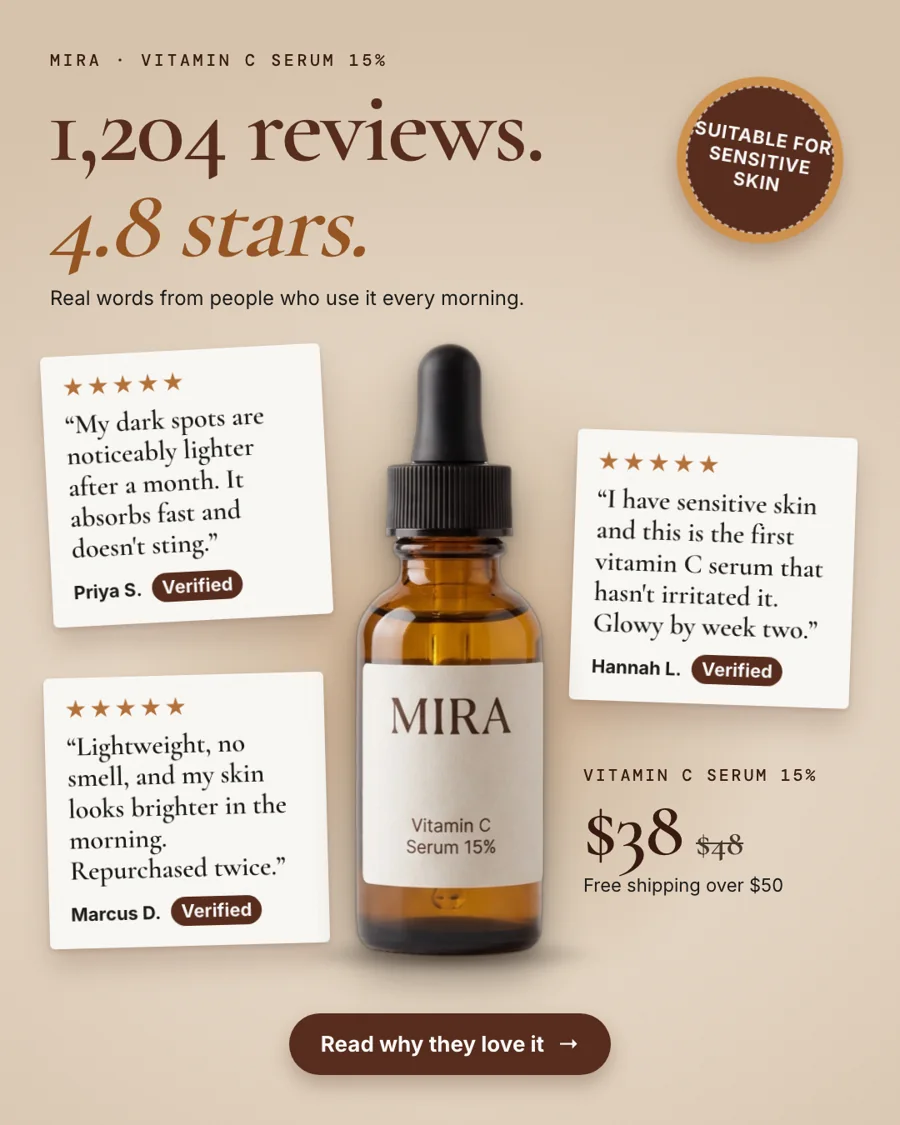
Pippit's image tools generate new pictures from your images and prompts. Generated product shots can change a label, a logo or a bottle's shape, and Pippit's pages don't describe any check of prices or review quotes against your store. For a premium brand running static ads on Meta, those are the parts that matter most.
Which one should you pick
- Pippit for avatar and UGC-style videos, trend remixes and a full social calendar on a small budget.
- StoreToAds for static ads where your product has to look exactly right and every number has to be true.
- Both: plenty of brands make videos in a video tool and let StoreToAds handle the weekly static ads. Any StoreToAds ad can also become a 7-second motion MP4 in 4:5 and 9:16, free.