Examples
9 skincare ad ideas that pass Meta review (and still sell)
Skincare ads get rejected for a few predictable reasons. These nine ideas are built to avoid them, with worked examples from Mira, our fictional sample brand.
By the StoreToAds team · · 4 min read
The three rules every idea follows
- Describe the product, never the person. Meta's advertising standards don't allow ads that assert or imply personal attributes, and that includes someone's physical condition. "Struggling with dark spots?" implies the viewer has them. "A vitamin C serum for dark spots" describes the product.
- No before-and-after, nothing that plays on insecurity. Meta restricts before-and-after images and content that can make people feel bad about their bodies. Most skincare brands simply don't use the format.
- Only claims you can back up. "Treats eczema" reads as a medical claim. Stick to what your own product page states and can support.
Rules change and enforcement varies, so read Meta's current Advertising Standards before you launch. The good news: these limits push you toward specific, factual ads, which tend to sell anyway.
Ideas built on the formula
1. The ingredient callout
Name the active and the percentage, then point at the bottle. Example headline: "15% vitamin C. Fragrance-free."
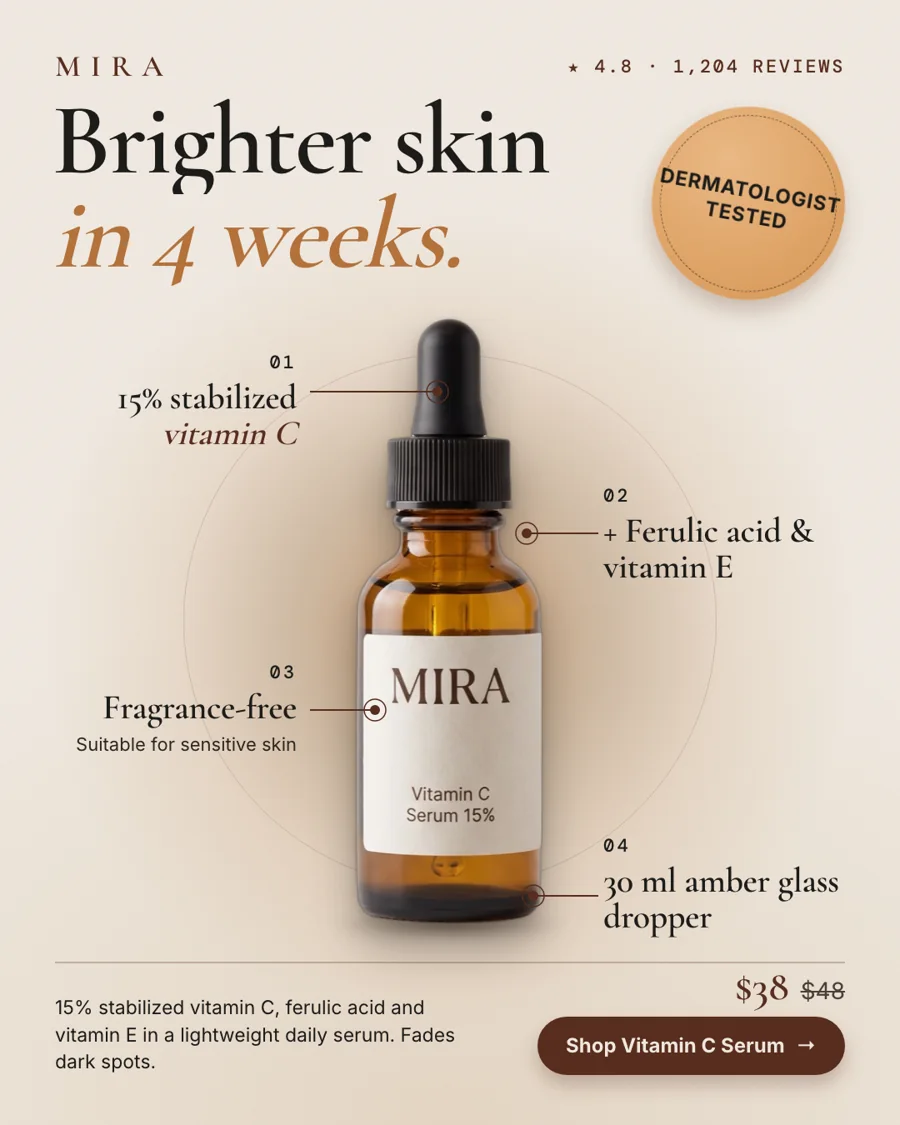
Note the headline on this one, "Brighter skin in 4 weeks." A result claim like that belongs in an ad only when your product page states it and you can substantiate it.
2. The texture close-up
A drop on the dropper, a swatch on glass. It shows what the product feels like without showing a face. Example headline: "Lightweight. Absorbs in seconds." (only if your page says so).
3. Who it's made for
Describe the formula in terms of skin types, not problems: "Suitable for sensitive skin" instead of "Is your skin sensitive?" It speaks to the right buyer without talking about their body.
Ideas built on proof
4. The quote wall
Three or four short, verbatim reviews around the product. Customers can describe their own results in their own words in a way your headline can't.
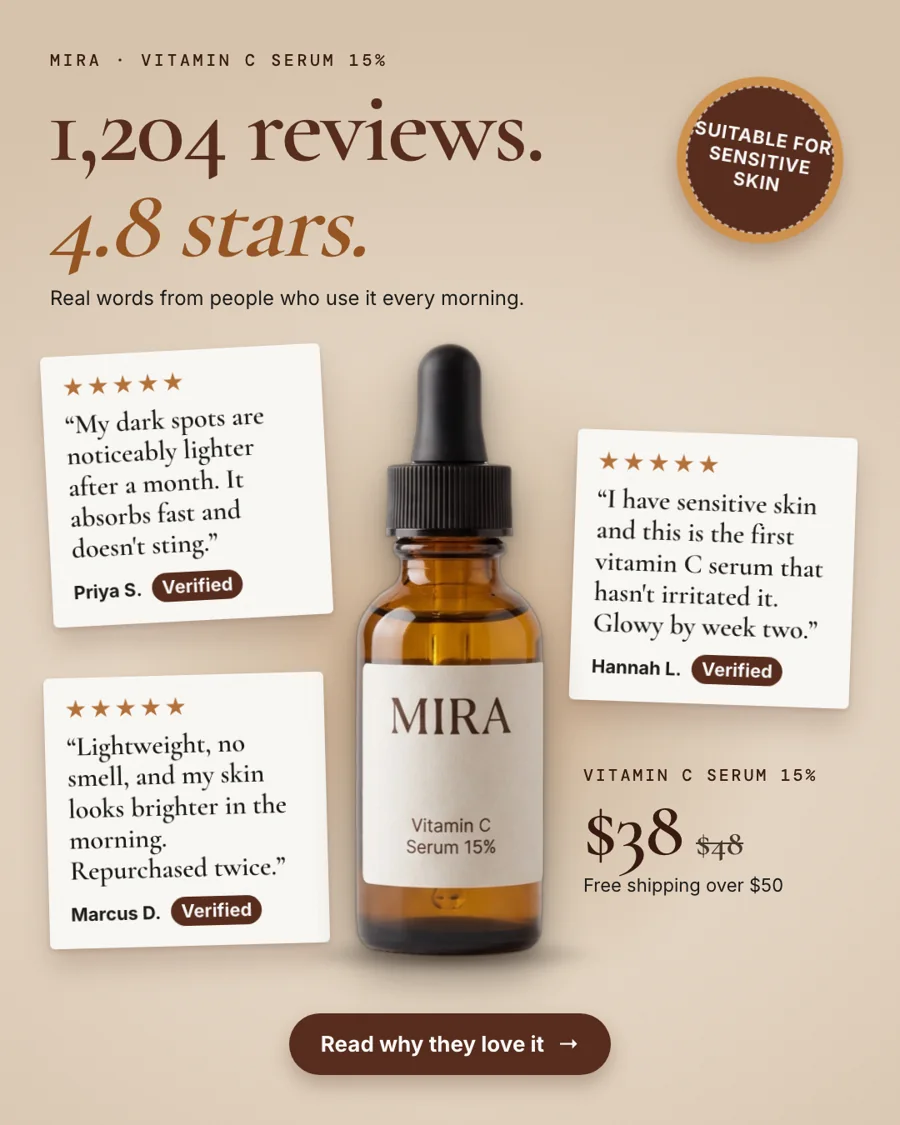
5. The big number
One huge figure your store can prove: "4.8 stars from 1,204 reviews." Only use counts and ratings that match your store exactly.
Ideas built on habit
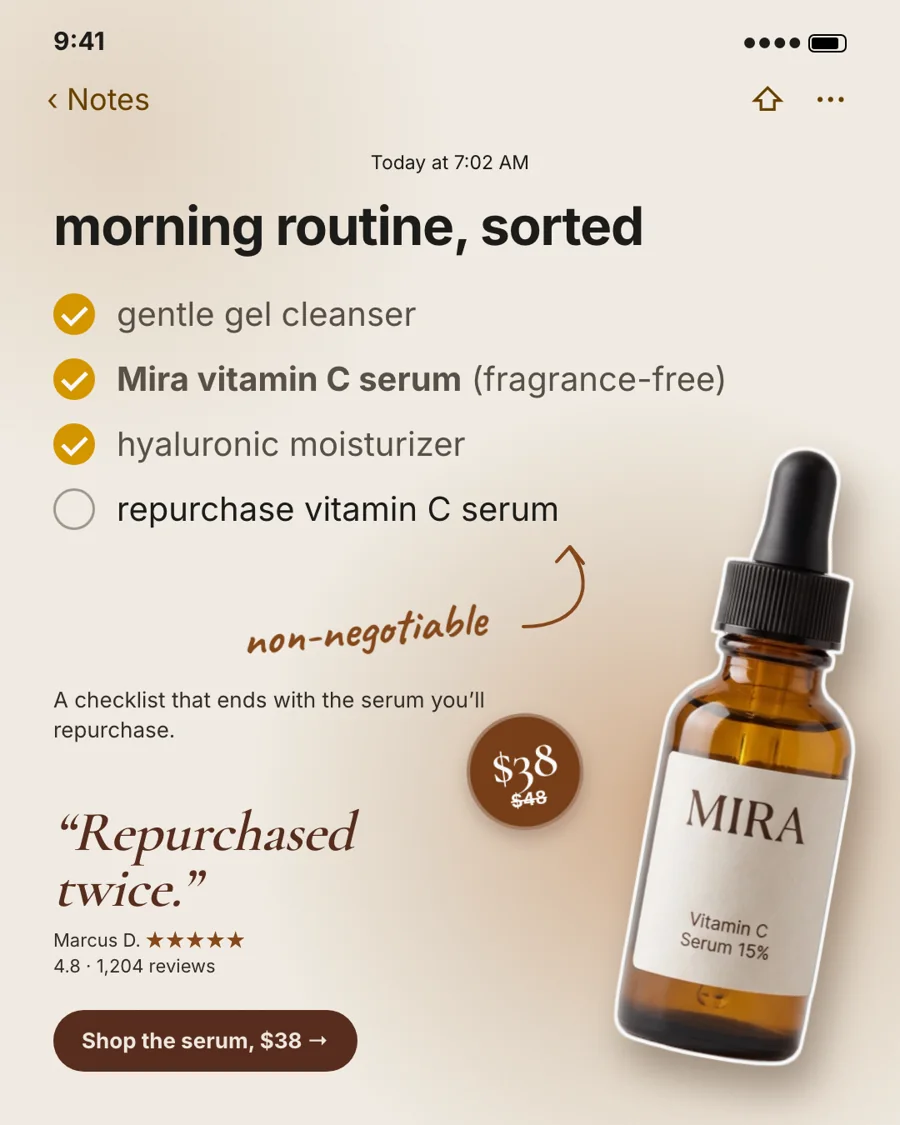
6. The routine slot
Show where the product fits in a day. A Notes-app checklist feels native in the feed and sells a habit, not a fix.
7. Problem and solution, done right
Name the problem as a general fact, never about the viewer, then show the product. Example: "Vitamin C breaks down in clear bottles. Ours comes in amber glass." Or "Most vitamin C serums are fragranced. This one isn't." Let customer quotes describe results.
Ideas built on news and price
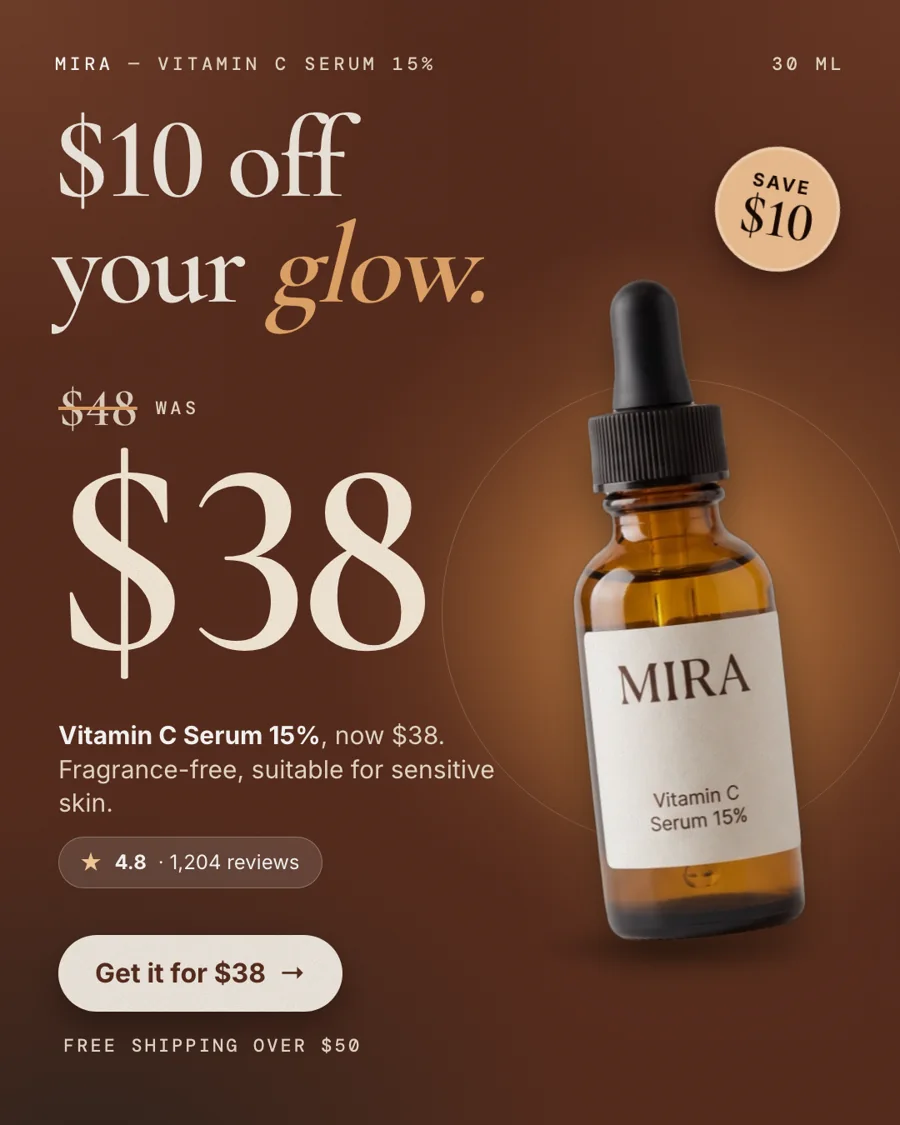
8. The honest offer
If the product is on sale, show the old and new price and nothing invented: no fake countdowns, no made-up deadlines.
9. The launch or the season
A new formula, or a seasonal swap: a richer cream for winter, SPF for summer. Example headline: "New: the overnight version." Keep it about the product and the season, not about what the cold does to the viewer's face.
Mistakes that get skincare ads rejected or ignored
- Questions aimed at the viewer. "Tired of dull skin?" is a personal-attribute problem even when it sounds gentle.
- Stock faces with perfect skin. They read as a promise of a result, and shoppers have learned to scroll past them.
- Vague claims. "Advanced formula" and "glow up" say nothing. Name the active, the size or the skin type.
- Percentages the page can't back up. "93% saw results" needs a real study behind it. If your page doesn't cite one, leave it out.
- A tiny bottle. If the packaging is a speck behind a mood shot, nobody knows what to look for when they land on your store.
Testing these ideas
Pick four ideas that are truly different, for example an ingredient callout, a quote wall, a routine ad and an offer. Run them together to the same audience for the same days, keep the product photo consistent, and judge on purchases or add-to-carts rather than likes. Then make two or three fresh versions of the winning idea and keep testing one new idea each round. Ads wear out, and the next winner usually comes from an angle you haven't tried.
How StoreToAds helps
Mira's four ads above all came from one product page. Paste your store link and StoreToAds does the same for your products: the real bottle, never redrawn, the actives your page states, and verbatim reviews, with every price, rating and quote checked against your store before an ad is delivered. Add claims you never want to see to "Never say" in Your brief and they stay out of every ad. More on the skincare ad generator page.