What sells shampoo, serum and masks
Haircare is bought by concern first and by ingredient second. A curl cream for coily hair and a volume spray for fine hair can share a shelf, but they should never share a headline.
- Say who the product is for in the first words. "Made for fine, flat hair" qualifies the right shopper. Describe the hair, not the person: "Thinning at the part?" points at the viewer, which is the kind of line Meta's personal attributes rules flag.
- Make the hero ingredient legible. If your page leads with rosemary oil, biotin or argan, that word belongs in the headline or a callout, not under the logo.
- Show texture when you have it. A store photo of a creamy mask or a glossy strand does more than any adjective; otherwise the bottle carries the ad on its own.
- Sell the routine. Shampoo, conditioner and mask as a set gives you a bundle price and a reason to buy all three.
Before-and-after, honestly
Hair results photograph well, which is exactly why they get overstated. If your store has real before-and-after photos of customers who agreed to be shown, they can carry an ad. If it doesn't, a verbatim review that describes the change ("my curls finally hold past lunch") is the honest version, and it tends to pass review more easily.
Honest note: we never generate, retouch or invent a result photo. A claim like "80% less breakage" only appears when your product page states it.
The routine angle, in practice
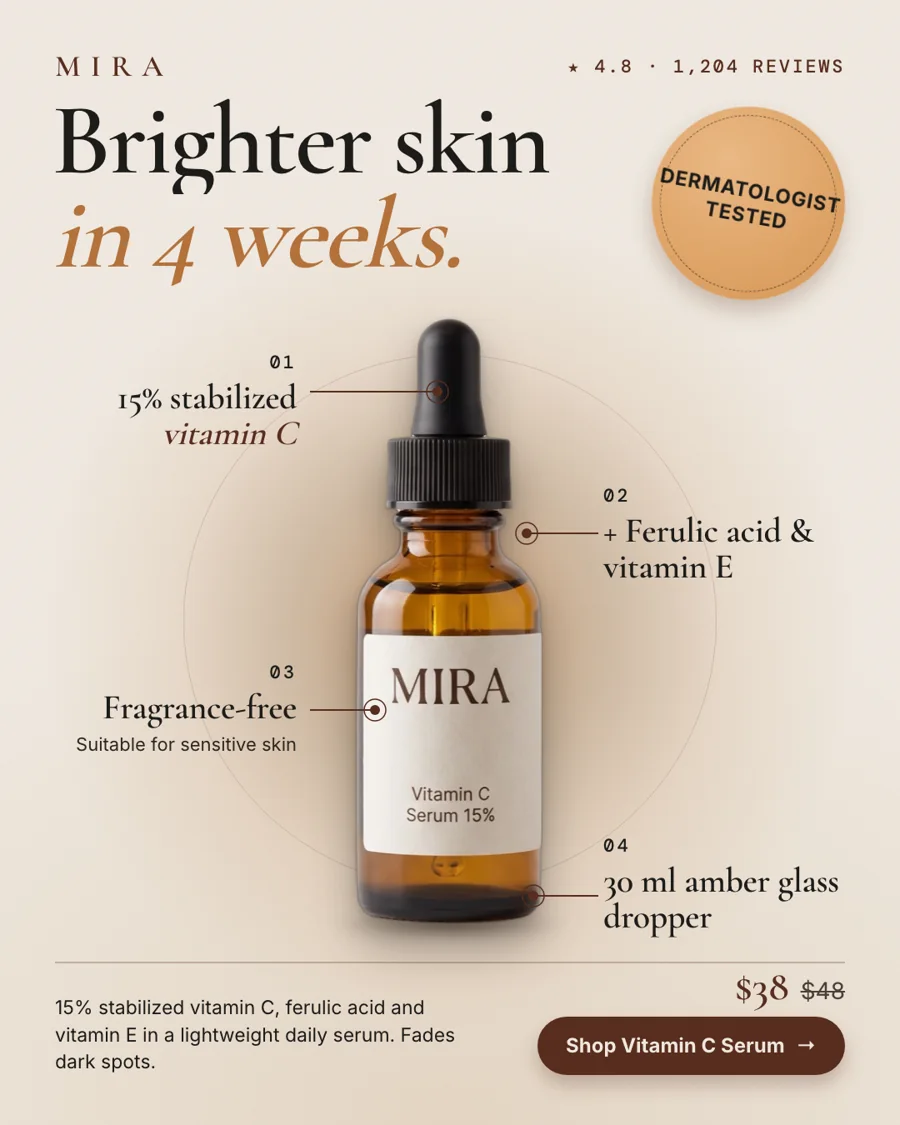
Our fictional sample brand Mira sells skincare, not haircare, but its Notes-app ad shows a format haircare brands use well: a checklist of steps that ends with the product.
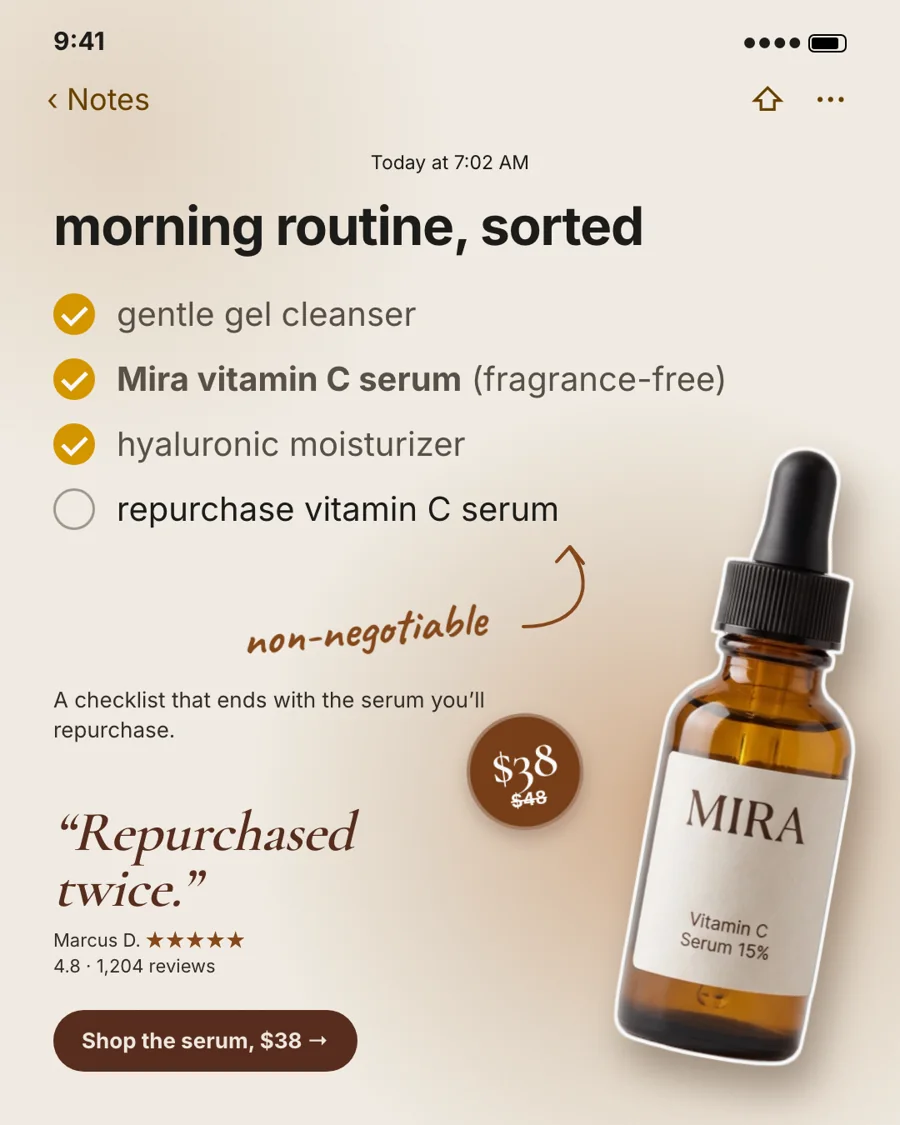
For a haircare line the same format becomes a wash-day list: clarify, condition, mask, then the leave-in you sell, with the price your store shows.