Percent off or dollar off?
A useful rule of thumb: on products under $100, a percentage usually looks like the bigger saving; above $100, the dollar amount usually does. It is a rule of thumb, not a law, so the honest answer is to run both and let the results decide.
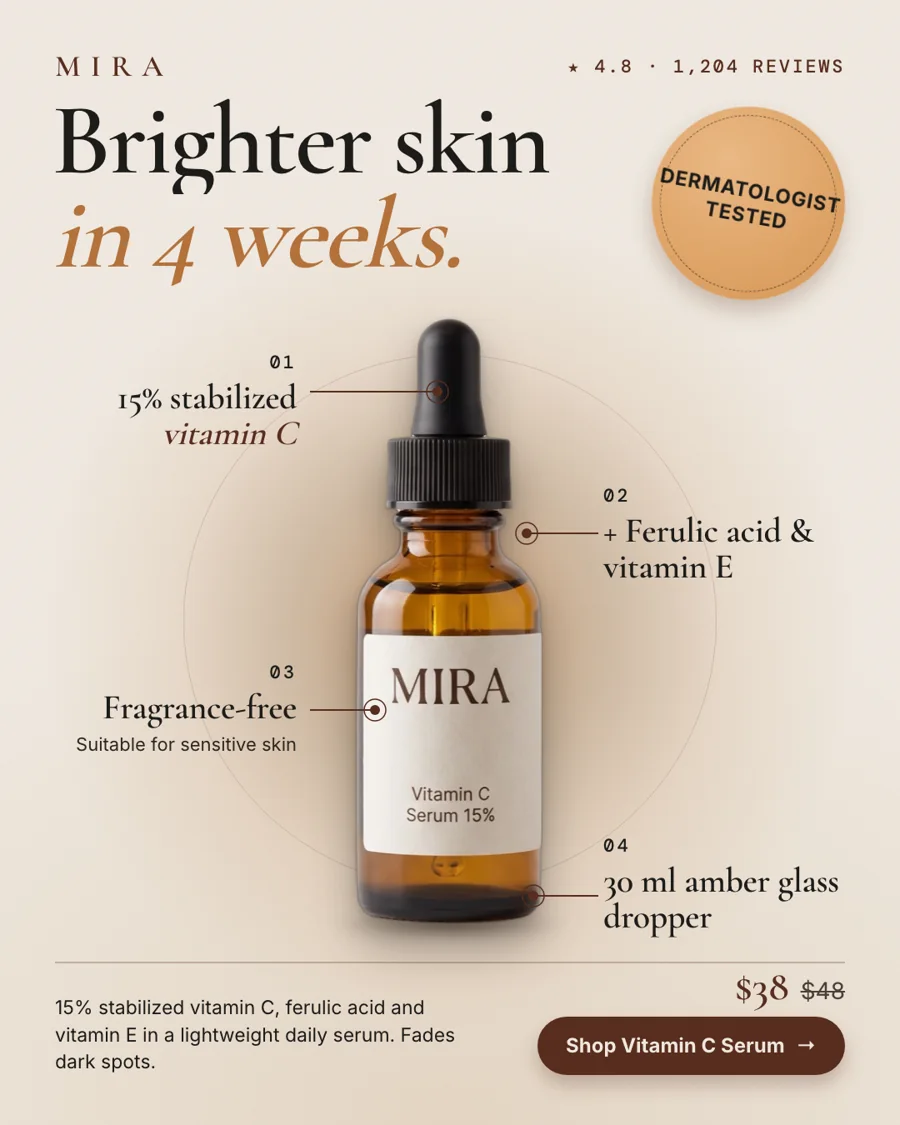
Our fictional sample brand Mira sells its Vitamin C Serum for $38, down from $48. That saving can be written as "$10 off" or as "21% off". The ad below leads with the dollar amount and keeps the old price struck through, so the maths is visible.

What makes a discount ad convert
- Show both prices. The old price struck through next to the new one proves the saving without a single extra word.
- Keep the product larger than the price tag, so the click is about the product.
- One offer per ad. "20% off plus a free gift plus free shipping" reads as noise.
- Name the condition: the code, the minimum order, which products are included.
- Add one reason to buy beyond price, such as a rating or a short review line.
Mistakes that cost trust
- A "was" price you never really charged. Some countries regulate reference prices, and shoppers notice.
- A code in the ad that fails at checkout.
- "Up to 70% off" on an ad whose hero product is 10% off.
- A discount ad still running a week after the sale ended.