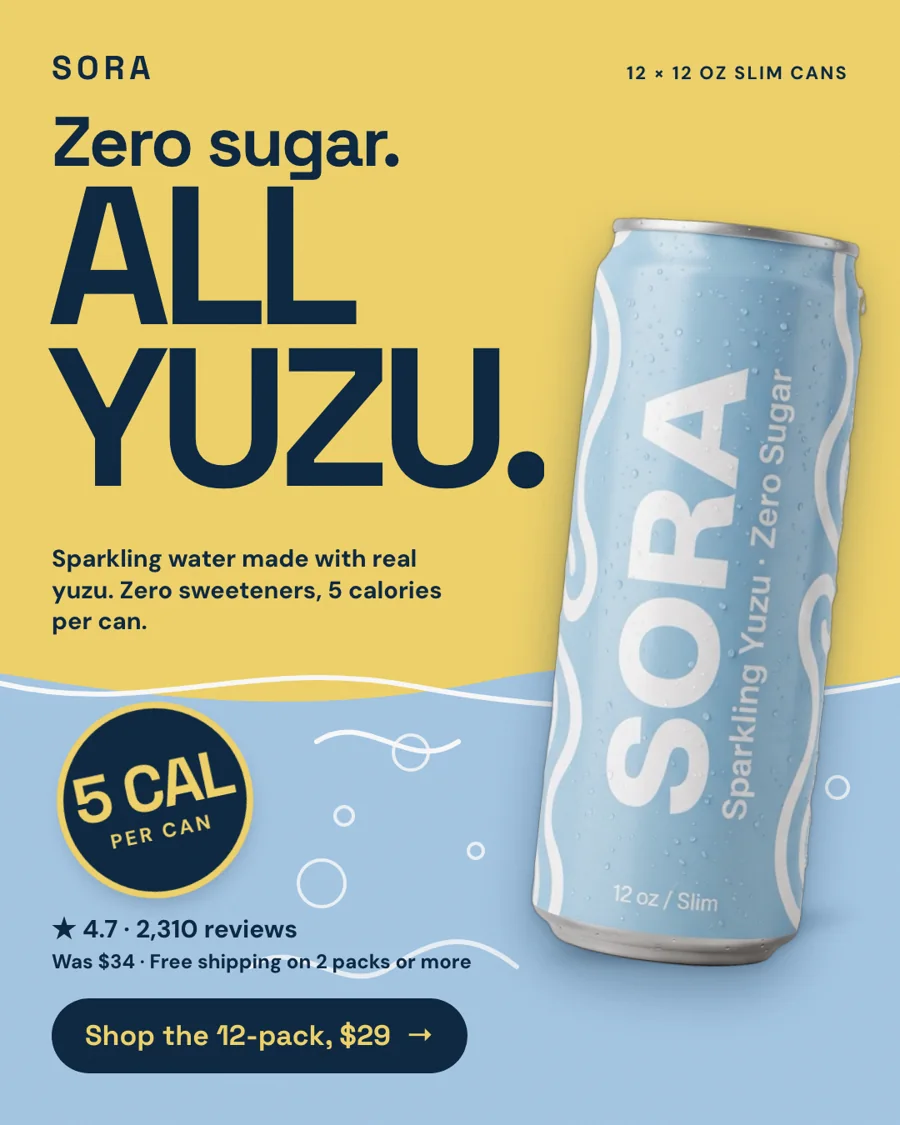
Compare against a category, not a competitor
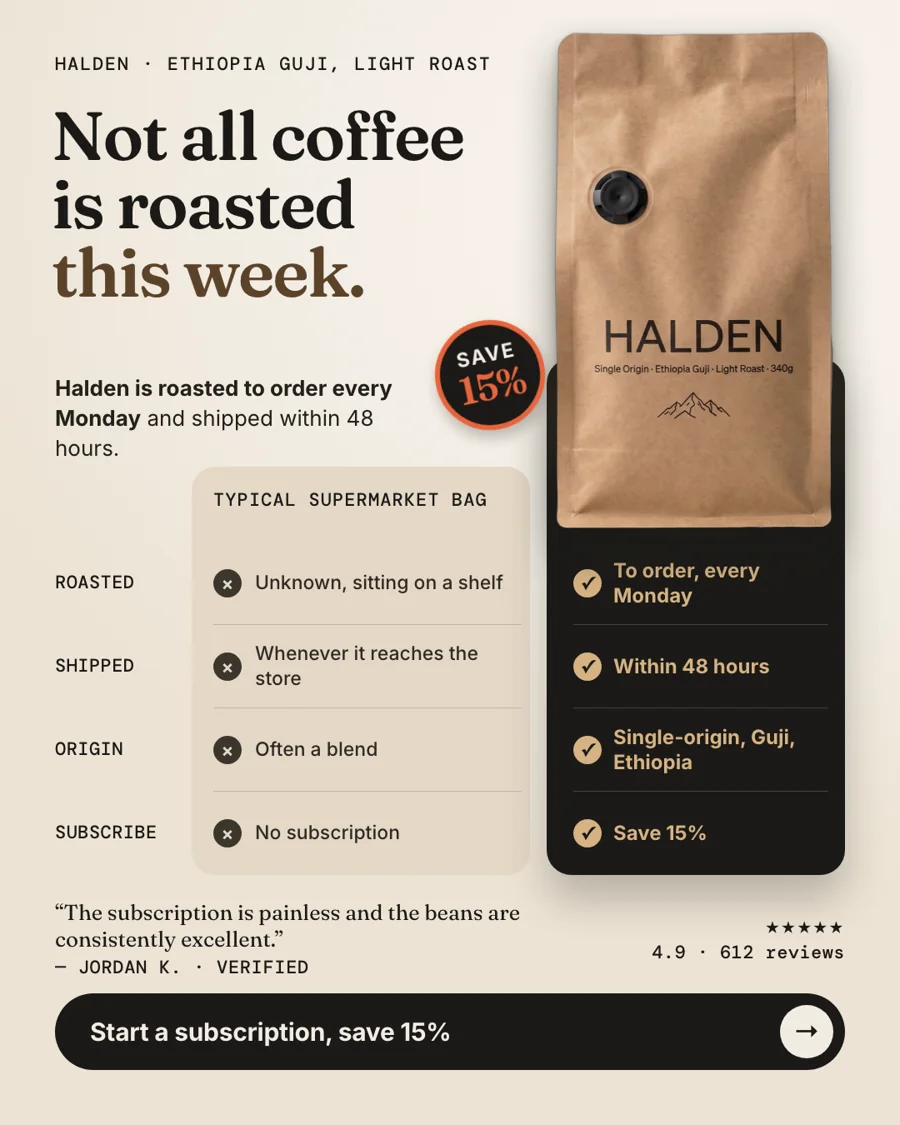
The cleanest comparison names the usual alternative, not a rival brand: "a typical supermarket bag", "drugstore serum", "fast-fashion tee". Naming a competitor invites legal trouble and ad review problems, and it makes your ad about them.
Choosing the rows
- Three to five rows. More than that and nobody reads the table.
- Each row is something buyers care about: freshness, ingredients, how long it lasts, price per use, shipping.
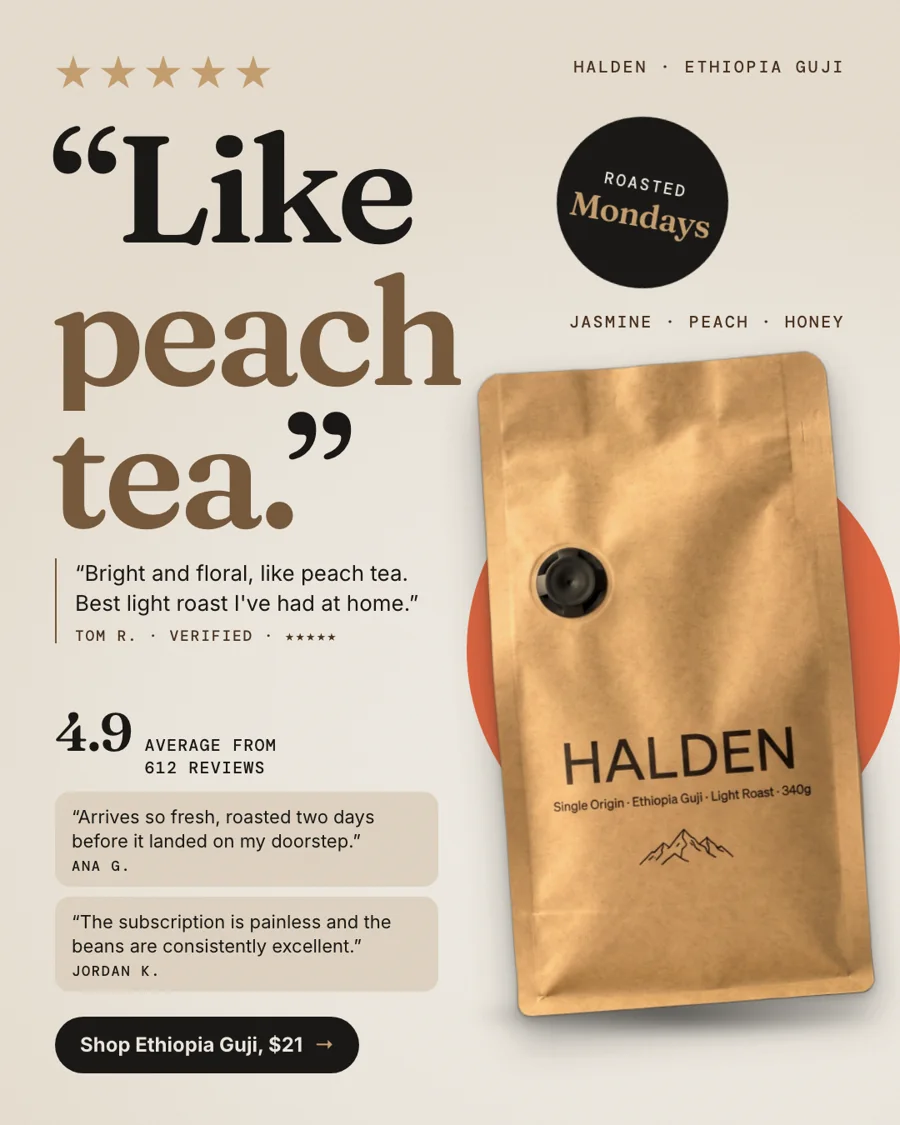
- Your side is specific: "Roasted to order every Monday", not "Fresher".
- Their side is fair: "Often a blend", not "Garbage". Shoppers distrust a rigged table.
- Include price only when you win or it is close, and end with proof such as your rating.
Other comparison shapes
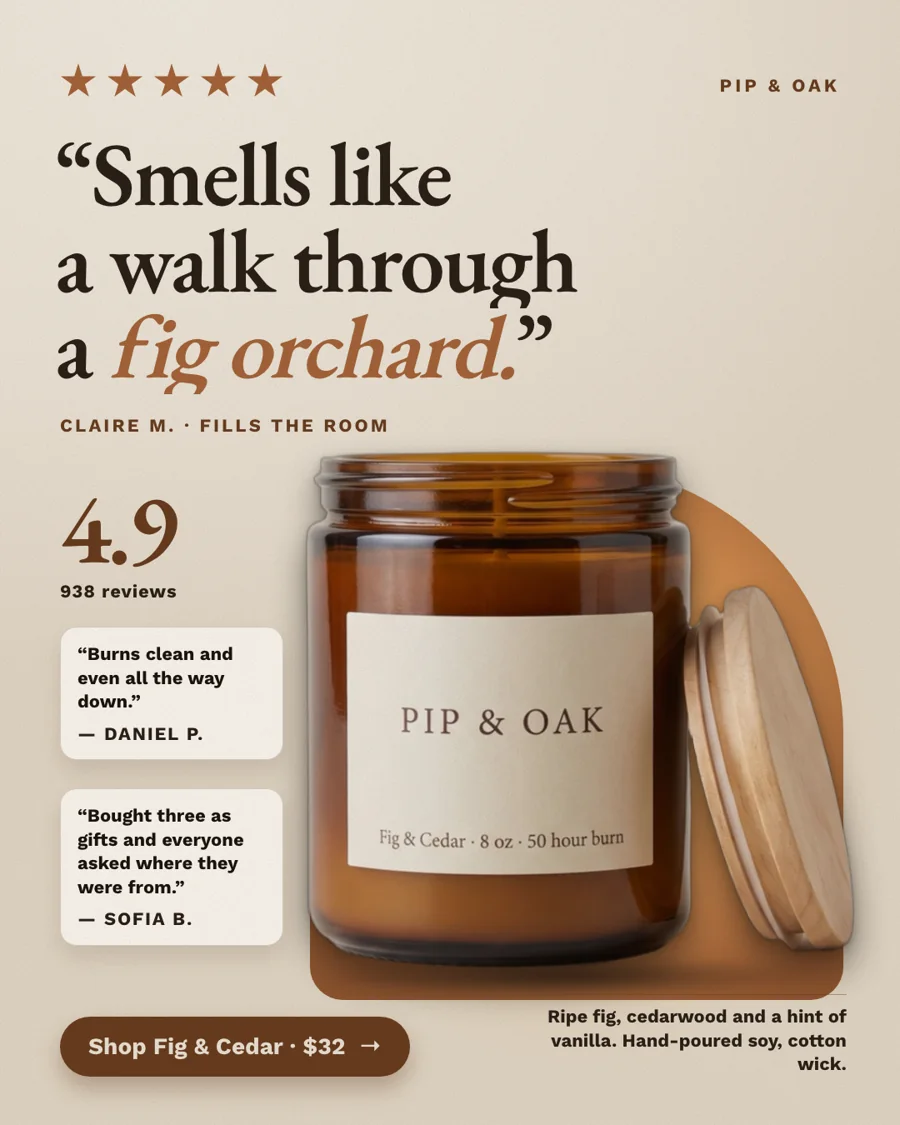
Old way versus new way works when your product replaces a habit. Price per use works when you cost more up front: a $32 candle with about 50 hours of burn time is roughly 64 cents an hour. One product versus the three it replaces works for multi-use items. A table reads best in 4:5 and 9:16, so check the wide 1.91:1 version before you run it on Google.