Review ad or testimonial ad?
| Review ad | Testimonial ad | |
|---|---|---|
| Leads with | Rating and review count | One person's words |
| Quote length | A short headline | Two or three sentences |
| Job | Prove the product is liked | Help the reader see themselves |
Both are built from real reviews. The difference is how much room one customer gets. See the review ad page for the short version.
What makes a testimonial believable
- A specific situation. "I have sensitive skin and this is the first vitamin C serum that hasn't irritated it" tells the right reader this is for them.
- A small arc: what they worried about, what happened, what they do now.
- Natural language. Real customers write in short, plain sentences, and that is the point.
- Attribution as your store shows it, such as a first name and initial. "Verified" only if your review app marks it.
- One customer per ad, so the voice stays clear.
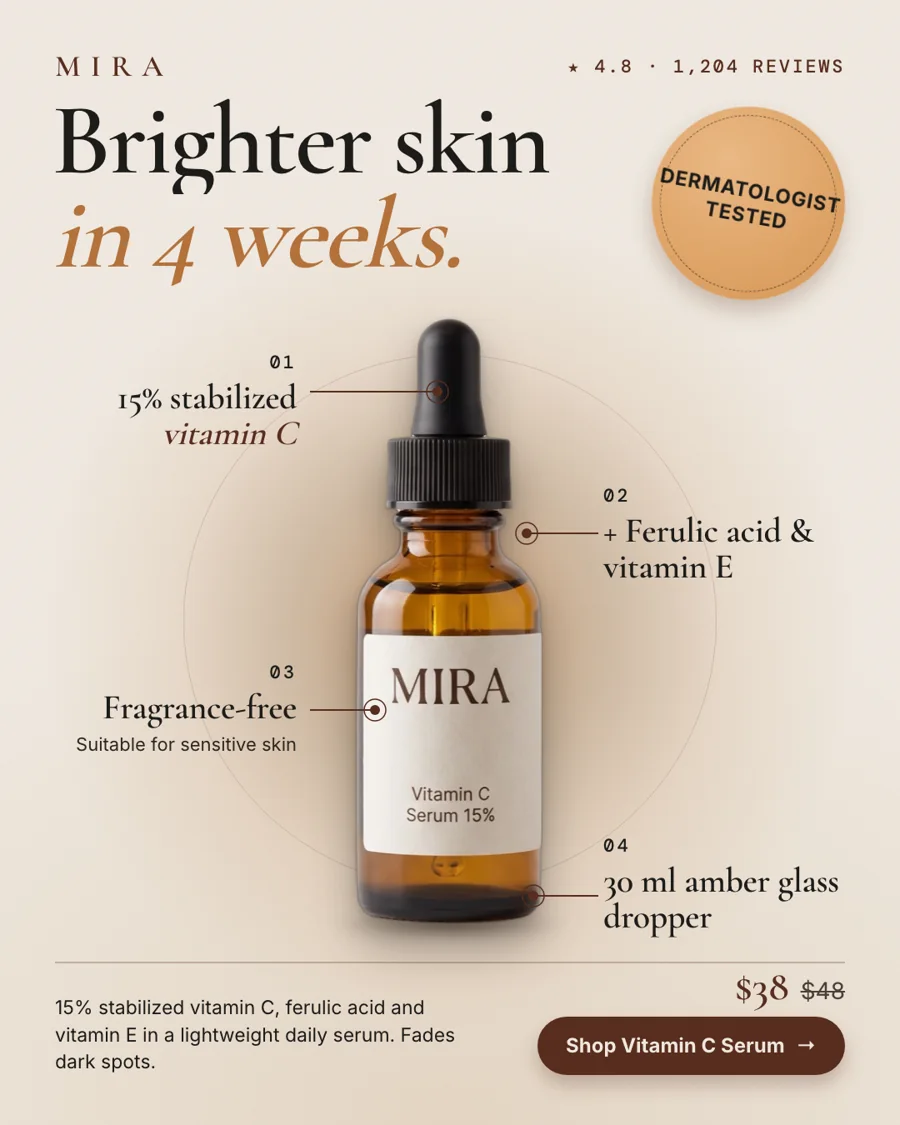
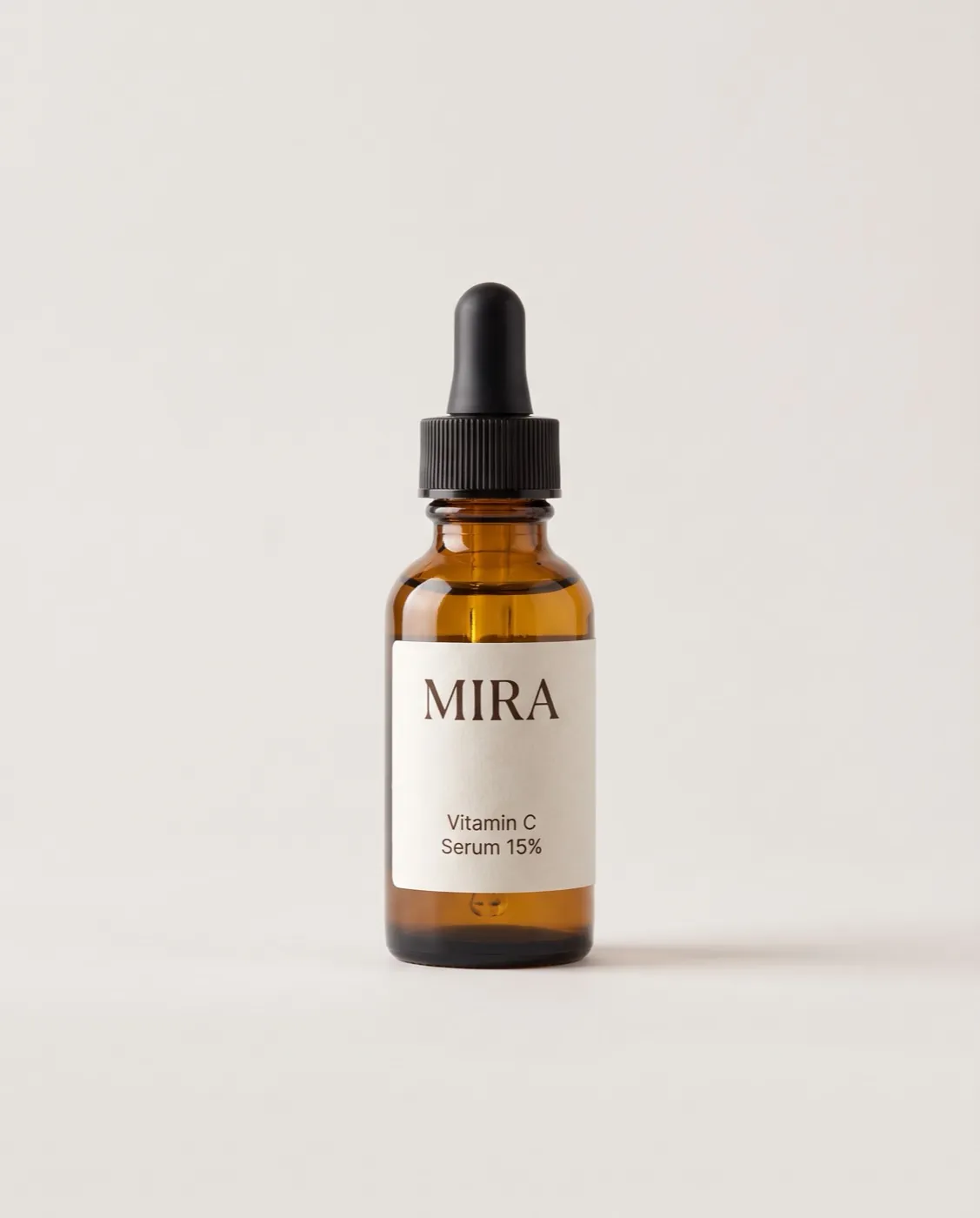
That sensitive-skin line comes from our fictional sample brand Mira, where it sits on a review card with the reviewer's name and the real rating beside the bottle.
Keep it honest
In the US, the FTC expects endorsements in ads to reflect real customers' honest experiences, and other countries have similar rules. Never edit a quote so it says something the customer did not, and do not present an unusual result as typical.